
Kitchen Storage
Food Storage Containers by Use Case: Fridge, Meal Prep, Lunch and Freezer
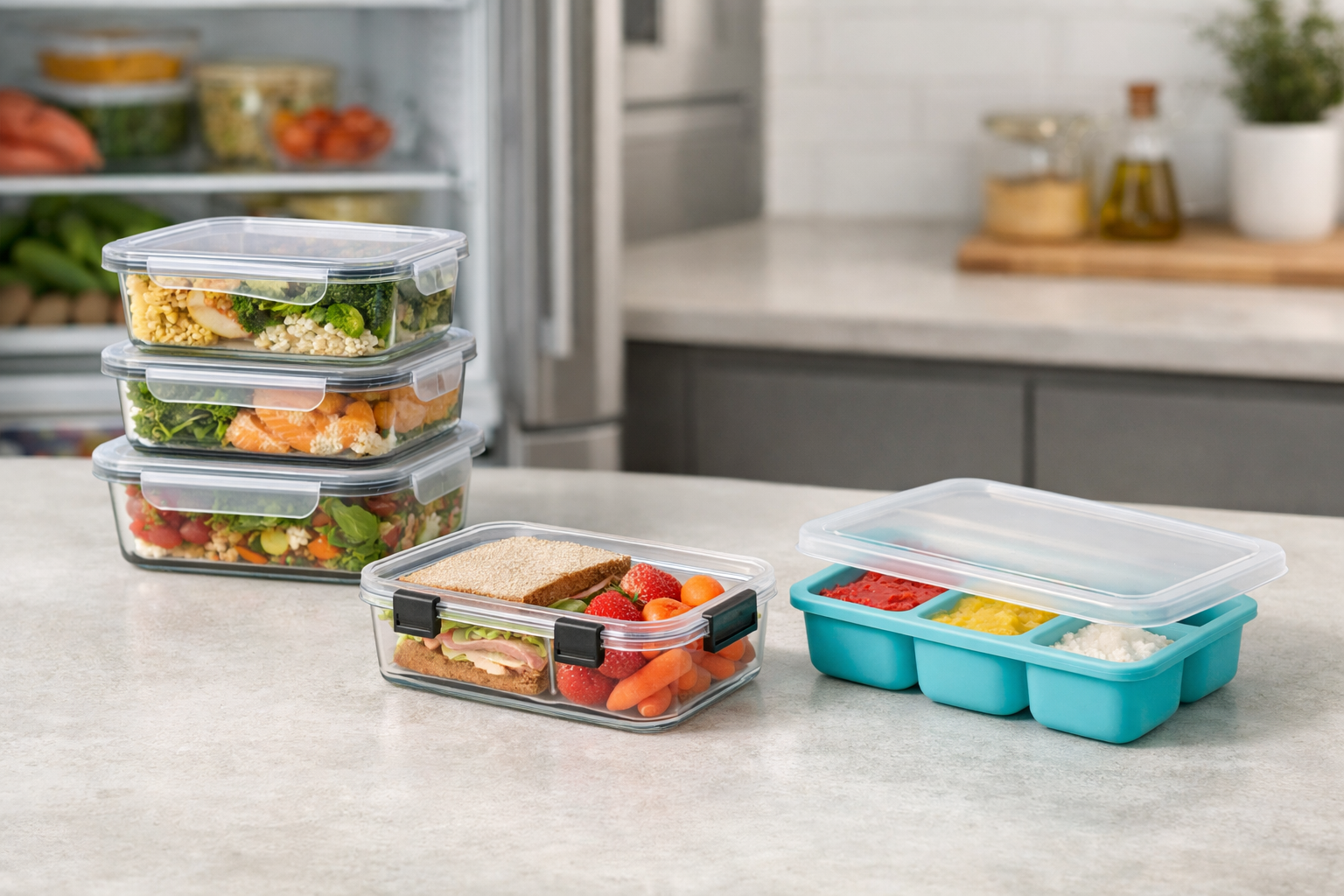
The most useful food storage containers are not necessarily the biggest set or the one with the most pieces. They are the containers that fit your shelves and cabinets, keep lid management reasonable and safely handle the way you store, carry, freeze or reheat food.
Disclosure: We may earn a commission from purchases made through links in this post, at no extra cost to you.
Quick picks by task
These options solve different jobs: lightweight leakproof lunch transport, repeatable glass meal prep, and measured freezer batching.
For lightweight leakproof lunches
Rubbermaid Brilliance Plastic 10-Piece Set
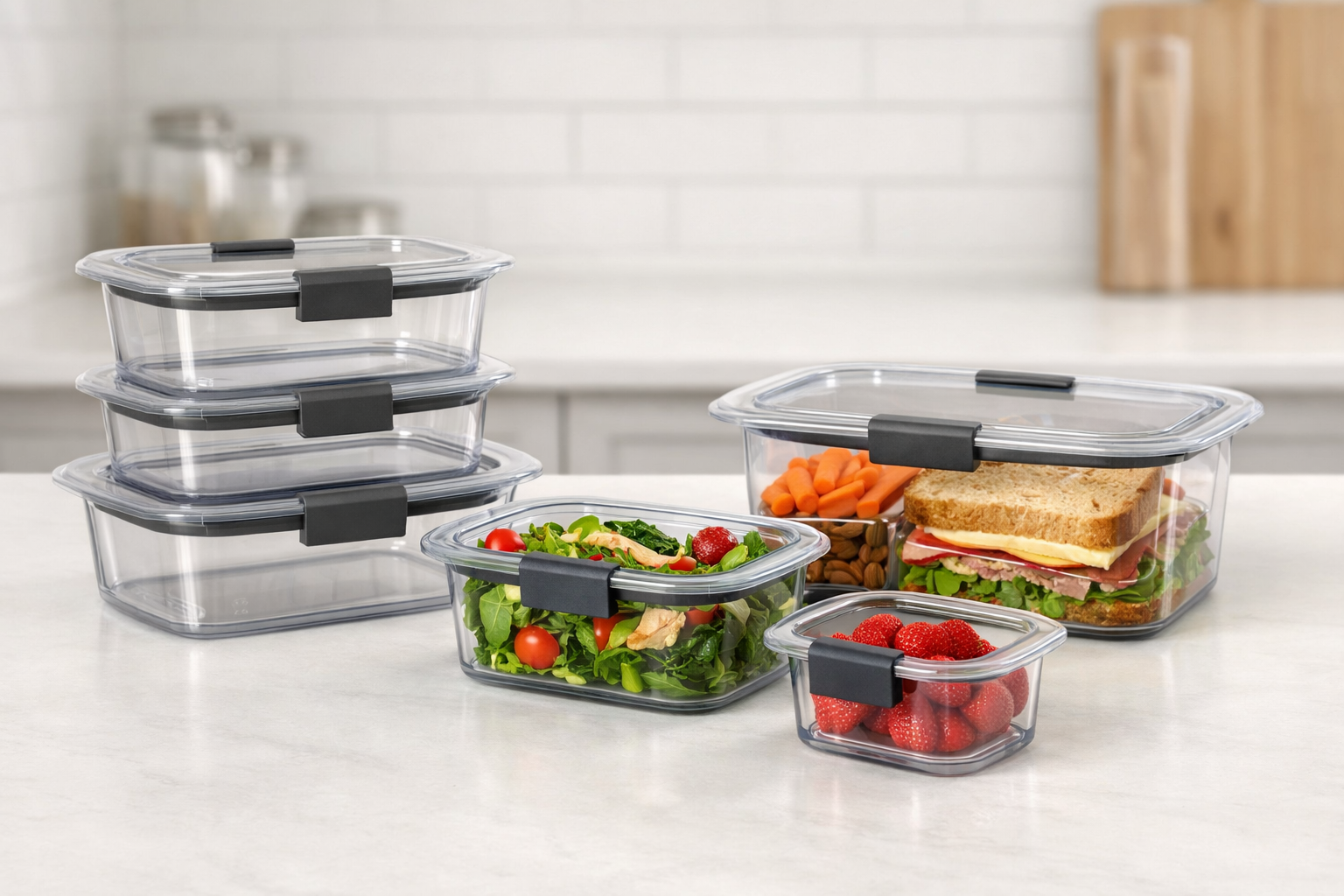
Five clear plastic containers in three capacities keep transport weight lower than glass while using dual-latch leakproof lids.
For uniform meal prep
Ello Duraglass Refresh Meal Prep Containers
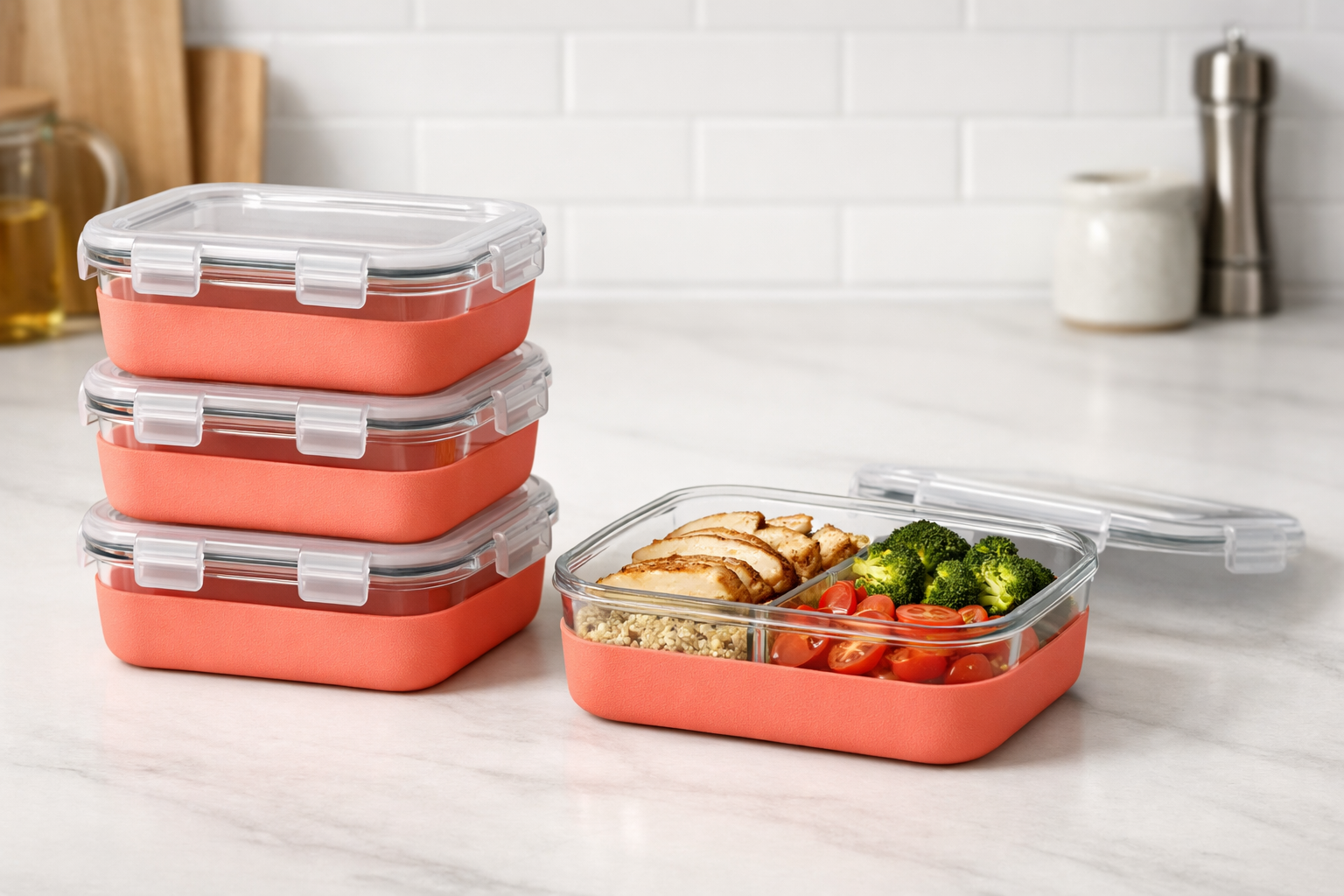
Five identical 3.4-cup glass containers simplify portioning and lid matching for repeatable weekly meals.
For measured freezer portions
Souper Cubes 1-Cup Silicone Freezer Mold
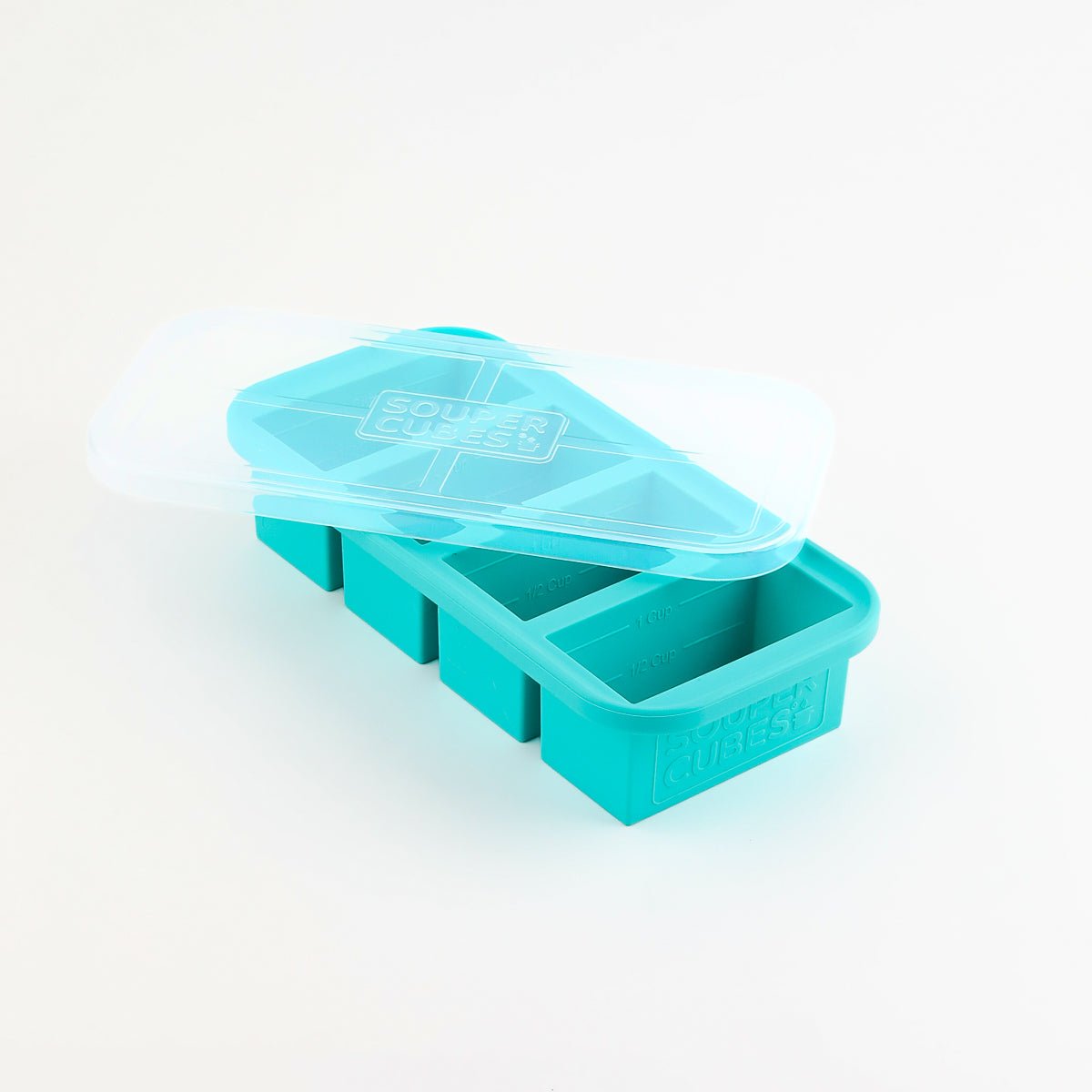
Four marked 1-cup cavities in one reinforced tray help freeze measured batches of soup, stock, sauce, grains or leftovers.
Choose food storage containers by use case, not one universal winner
A container system that works well in the refrigerator can be awkward in a work bag. A glass meal-prep set may stack neatly when full yet consume an entire cabinet shelf when empty because its containers do not nest. Freezer molds solve portioning but are not substitutes for leakproof lunch containers.
Start with the physical and operational constraints of the job. Measure usable cabinet space, refrigerator shelf height and freezer-drawer clearance. Then consider lid formats, portion sizes, full-load weight and the limits of every component. Exterior dimensions and shape matter more than nominal capacity if a container leaves dead space or prevents a drawer from closing. Our small kitchen measurement checklist can help organize those measurements.
Cabinet footprint: nesting is not the same as stacking
Nesting describes how containers fit together when empty. Stacking describes how securely filled, lidded containers sit on one another. You may need both, but many glass meal-prep sets provide stable in-use stacking without nesting for compact cabinet storage.
Before buying a large set, mark out the exterior footprint on the shelf where it will live. Account for the full stack of bases and a separate stack or organizer for the lids. A smaller system with fewer lid formats can be easier to maintain than a high-piece-count assortment.
Refrigerator fit and portion format
Rectangular containers generally make deliberate use of straight shelf edges, but the correct footprint depends on your refrigerator. Check whether filled containers stack without sliding and whether you can see the contents without unloading the shelf. Buy capacities that match the portions you actually store rather than treating total piece count as the main measure of value.
Lunch transport and full-load weight
For commuting, an explicitly leakproof closure should take priority over a lid that merely presses into place. Glass resists food stains and odors, but it is heavier and breakable. That difference becomes more noticeable after adding a full meal, an ice pack and other items to a bag. Plastic is lighter and shatter-resistant, but it should not automatically be assumed to resist stains or tolerate oven heat.
Heat, freezer and dishwasher limits
Verify the base, lid, seal and protective sleeve separately. A glass base may be suitable for oven or microwave use while its lid is not. Likewise, a dishwasher-safe set may still require a particular rack position. Follow the maker’s instructions and avoid rapid temperature changes with glass even when it is described as freezer- and oven-safe.
Food storage container comparison
| Option | Best use | Storage format | Key trade-off |
|---|---|---|---|
| Rubbermaid Brilliance Plastic 10-Piece Set | Packed lunches | Modular stacking; shared lid size within the set | Not oven-safe |
| Ello Duraglass Refresh Meal Prep Containers | Repeatable meal-prep portions | Five matching containers stack but do not nest | Heavier than plastic |
| Souper Cubes 1-Cup Silicone Freezer Mold | Measured freezer portions | One lidded tray with four total cavities | Not a lunch container |
Rubbermaid Brilliance Plastic 10-Piece Set
Best for: Packed lunches and leakproof transport where low weight matters
The Amazon-linked Rubbermaid Brilliance 10-piece set (model 1976520) includes two 1.3-cup containers, two 3.2-cup containers and one 9.6-cup container, each with a lid. Dual-latch airtight and leakproof lids make it the transport-focused option in this guide, while rigid plastic is lighter and more resistant to shattering than glass.
Why it works
The clear modular forms make contents visible, and the containers are designed to stack. One Smart Lid size fits multiple containers in this set, reducing lid-matching work. Built-in microwave vents sit beneath the latches. The containers are top-rack dishwasher-safe, microwave-safe and freezer-safe according to the manufacturer.
What to check
Confirm that the 1.3-, 3.2- and 9.6-cup capacities match the meals and snacks you carry. Check the exterior footprint against your lunch bag and refrigerator shelf rather than relying only on capacity. The bases are not oven-safe.
Skip it if
Choose another format if you primarily want stain-resistant glass, regularly bake or reheat food in an oven, or prefer five identical containers for a uniform meal-prep routine.
Ello Duraglass Refresh Meal Prep Containers
Best for: Repeatable weekly meal prep and reheating in the same container
The Melon set contains five identical 3.4-cup glass containers, five BPA-free locking lids and protective silicone boots. Its uniform format suits people who prepare the same serving size across several days and want to avoid sorting different base and lid sizes.
Why it works
Glass resists food stains, while the airtight, leakproof snap-lock lids support storage and transport. All parts are dishwasher- and freezer-safe. The glass bases are microwave-safe without the lids and oven-safe to 450°F without the lids; the silicone boots may remain on. Five matching footprints also create a predictable refrigerator layout.
What to check
These containers stack but are not designed to nest, so measure cabinet space for five empty glass bases. Remove the lid for microwave and oven use, follow the maker’s instructions and avoid rapid temperature changes. Also consider the combined weight if you plan to carry several filled containers at once.
Skip it if
It is less suitable if compact empty storage is your first priority, you need several capacities for mixed leftovers, or you want the lightest possible container for a daily commute.
Souper Cubes 1-Cup Silicone Freezer Mold
Best for: Freezing measured portions of soup, stock, sauce, grains and leftovers
This Aqua one-pack contains one tray with four 1-cup cavities, providing four portions in total. Each cavity is marked at 1/2 cup, 1 cup, 125 mL and 250 mL. The tray uses food-grade silicone, an embedded steel-reinforced rim and a fitted plastic lid.
Why it works
The reinforced perimeter helps with carrying flexible freezer trays while filled. Marked cavities make portion size visible, while the lids support orderly stacking. Once portions are frozen, they can be transferred to your preferred freezer-storage setup so the tray can be reused.
What to check
Measure the tray footprint and vertical clearance required by the fitted lid in your freezer drawer or shelf. Decide in advance where released portions will go so the tray does not remain occupied longer than necessary. Use the fill markings and leave clearance for the lid rather than overfilling the cavities.
Skip it if
This is a specialized freezing tool rather than a leakproof lunch box. Skip it if your main requirement is carrying a complete meal, organizing refrigerator leftovers in multiple capacities or reheating food in the same lidded vessel.
A practical lid and replacement strategy
Lids often determine whether a container system remains convenient. Count the distinct lid formats, not just the total number of pieces. Identical meal-prep containers reduce matching work, while a shared-lid design can simplify a mixed-capacity system. Also decide whether lids will attach to bases, stack together or require a separate organizer.
Replacement-lid availability is a lifecycle consideration because a sound base becomes less useful when its matching closure is lost or damaged. Check the manufacturer’s current replacement options for the exact model before buying. Do not assume visually similar lids from another set or generation will fit.
Glass or plastic?
Glass is a strong fit for refrigerator storage and meal prep when stain and odor resistance matter and extra weight is acceptable. It can also offer broader reheating options when the manufacturer explicitly approves the base for microwave or oven use. Its disadvantages are weight, breakability and, in many sets, a larger cabinet footprint because the bases do not nest.
Plastic makes more sense when low carrying weight and shatter resistance lead the decision. It remains important to verify stain resistance, dishwasher placement and heat limits for the exact product. Plastic should never be placed in an oven unless the manufacturer expressly permits it; the Rubbermaid Brilliance plastic bases covered here are not oven-safe.
Food storage container FAQ
How many food storage containers should I buy?
Base the number on a normal storage cycle rather than the largest batch you might make. Count the lunches, prepared portions and leftover containers typically in use before your next dishwasher cycle. A smaller set in useful capacities can create less cabinet and lid clutter than a large assortment bought by piece count.
Do stackable containers also nest?
Not necessarily. Stackable containers are designed to sit securely on one another during storage, often while lidded and full. Nesting refers to empty bases fitting inside one another. Many glass meal-prep containers stack but do not nest.
Can a freezer-safe glass container go directly into a hot oven?
Do not assume that freezer-safe and oven-safe claims permit rapid temperature changes. Verify the limits for the exact base and lid, follow the manufacturer’s instructions and avoid thermal shock. Lids commonly have lower heat limits than glass bases.
What should I prioritize for a packed lunch?
Look for an explicitly leakproof closure, a capacity suited to your portion and an exterior footprint that fits your bag. Consider the weight of the container when full. Glass offers stain resistance but adds weight, while plastic is lighter and shatter-resistant.
Are freezer portion trays the same as food storage containers?
They serve a narrower purpose. A reinforced, lidded freezer tray can divide a batch into measured portions, but it is not automatically suitable for transporting lunch. Plan where the frozen portions will be stored after release if you want to reuse the tray promptly.
How We Researched
We compared manufacturer specifications and current retailer information for exact container variants. The assessment focused on the constraints that change day-to-day usefulness: exterior storage format, nesting versus stacking, number of lid formats, explicitly leakproof closures, portion capacity, full-load weight, material, freezer and reheating limits, and restrictions that apply separately to bases and lids. Learn more about how we research product guides.
Products were assigned to the tasks they address rather than ranked as interchangeable choices. Current variant availability was rechecked on September 25, 2026. Marketplace selections can change, so confirm the model, set size and color shown at checkout before buying.