
Pets · Dog Car Travel
Dog Car Seat Covers That Actually Fit Your Vehicle and Dog
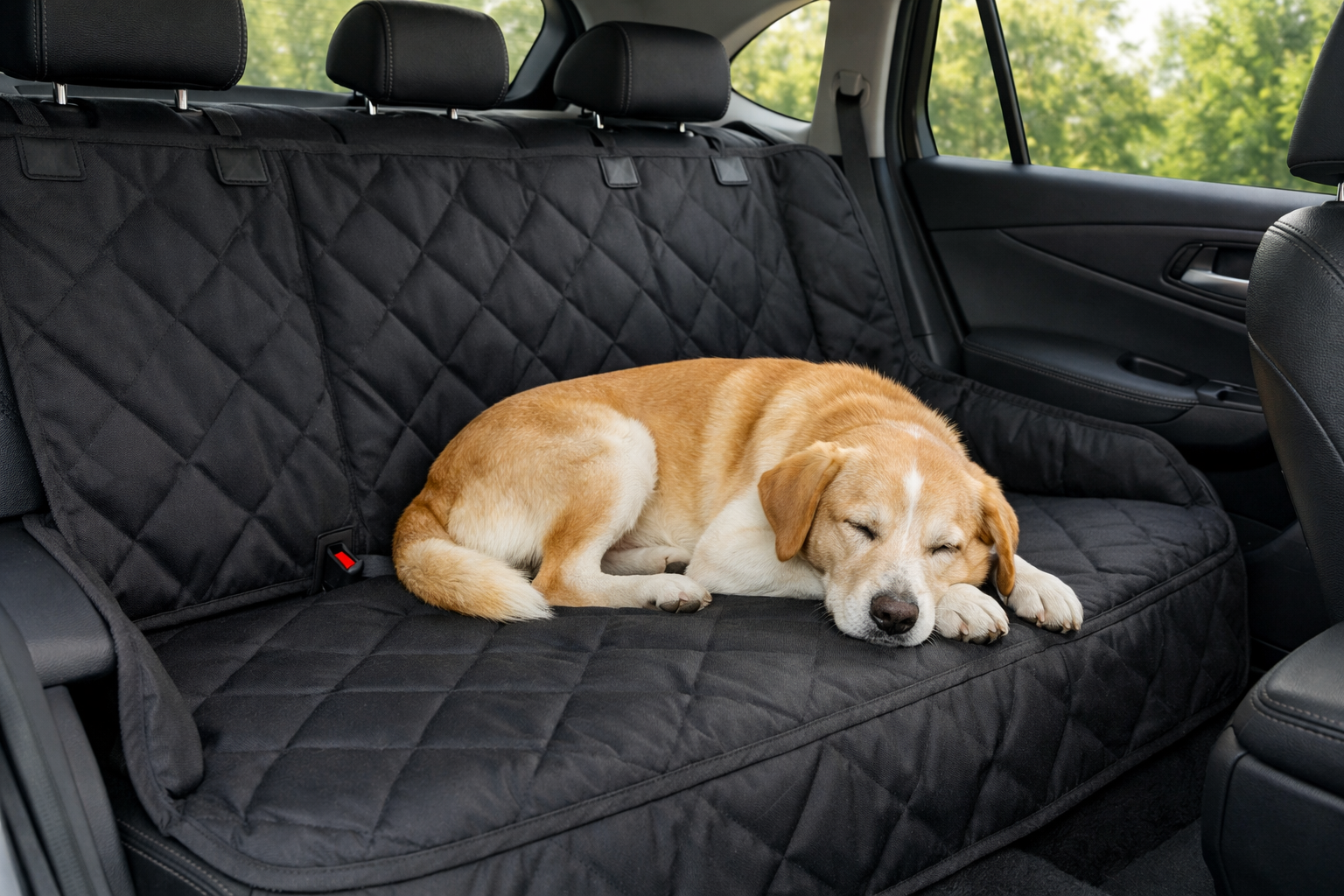
The right cover depends on your usable rear-bench width, cushion depth, footwell gap, headrests and required belt access—not simply whether you drive a car, SUV or truck. Here is how to choose between a bench cover, soft hammock and hard-bottom extender without confusing upholstery protection with safe restraint.
Disclosure: We may earn a commission from purchases made through links in this post, at no extra cost to you.
Quick picks by vehicle constraint
These options cover two hard-bottom extenders and one soft hammock for different rear-seat needs. Measure the actual installation area before choosing.
For conventional cars and SUVs
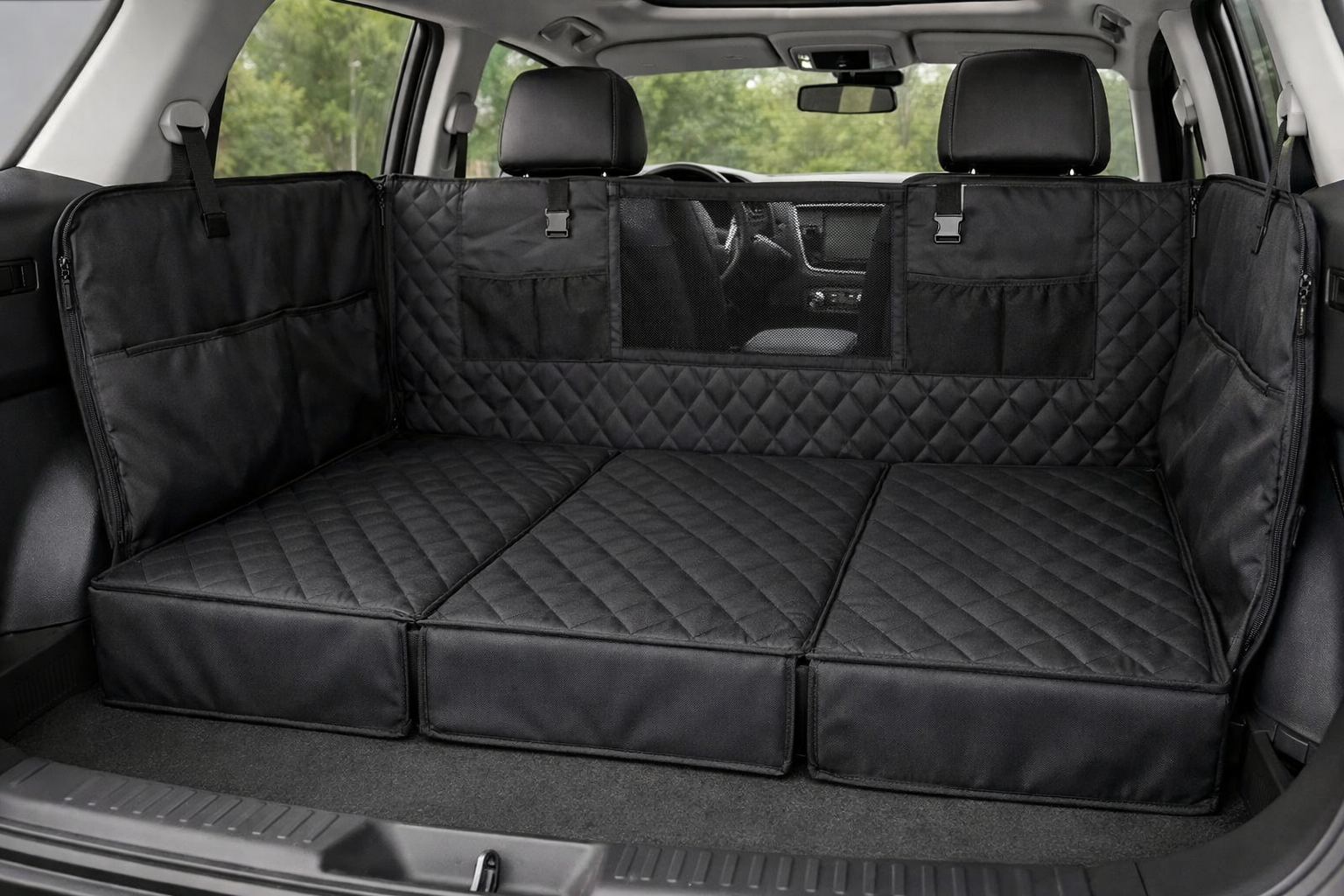
URPOWER Hard Bottom Dog Car Seat Cover
A rigid three-section platform extends over the rear footwell to create a larger supported surface. Confirm bench width, cushion depth and the seat-to-front-seat gap.
For full-size crew-cab pickups
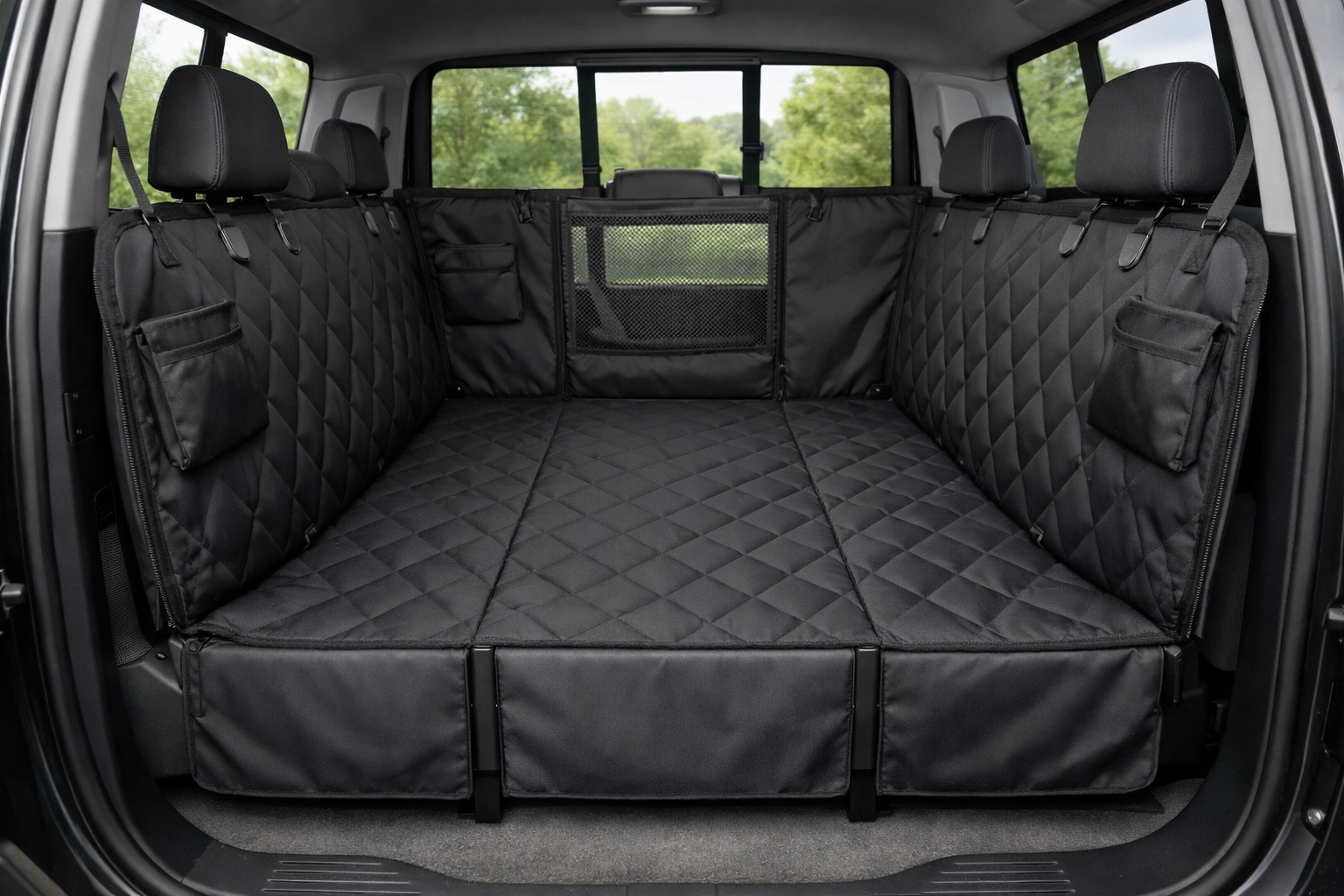
URPOWER XL Hard Bottom Dog Seat Cover
The extra-wide configuration is marketed for full-size crew-cab trucks. A cab label does not guarantee fit, so measure between the closed doors and across the footwell.
For flexible hammock coverage
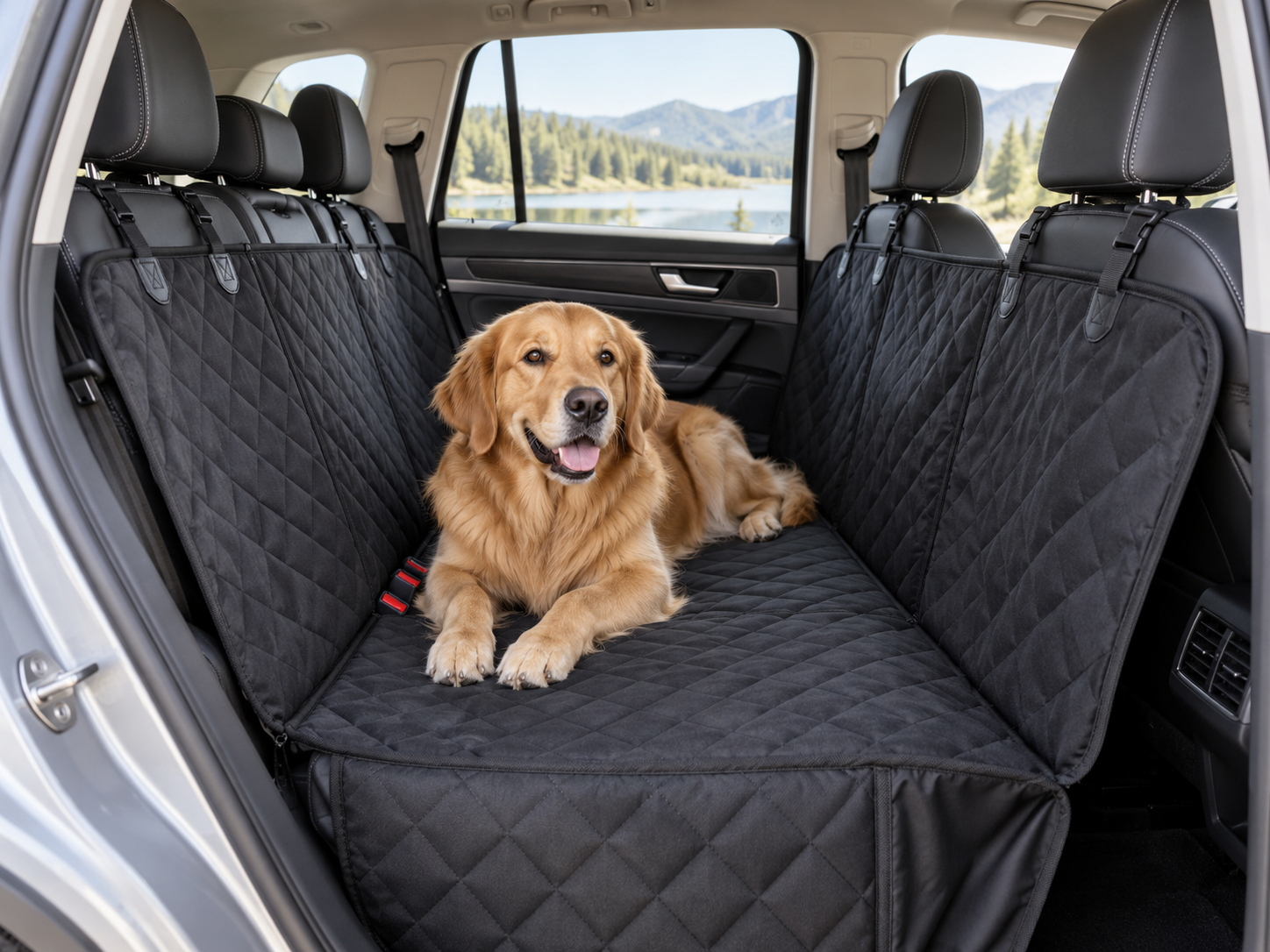
4Knines Dog Rear Seat Cover with Hammock
A soft 54 × 58-inch hammock option for standard-width rear seats when a rigid footwell bridge is unnecessary. Check headrest attachment points and belt or LATCH access.
The 60-second fit check
- Measure usable bench width. Measure between the closed rear-door panels where the cover will sit.
- Measure cushion depth. Record the distance from the seatback to the front edge of the cushion.
- Measure the footwell gap. For a hard-bottom extender, measure from the rear-seat edge toward the front seats in their normal occupied positions.
- Inspect all headrests. Fixed, integrated or missing headrests can prevent hammock installation.
- Identify required openings. Note every seat belt, LATCH or ISOFIX point needed for passengers, child seats or a separate dog restraint.
- Check your dog’s entry route. A rigid platform creates a higher entry and exit surface.
Measure the space the cover will actually occupy
Vehicle categories are only rough starting points. Two midsize SUVs can have different door contours, rear-seat depths and headrest designs. Start with usable width between closed door panels, then check whether side flaps or structured walls will fit without interfering with door closure.
Hard-bottom extenders add another fit question: what supports each rigid panel? Measure the seat cushion and gap ahead of it with the front seats positioned for usual occupants. Do not bridge captain’s chairs or an open center gap unless the manufacturer expressly permits that installation.
Bench cover, soft hammock or hard-bottom extender?
Choose a bench format when people share the row
A bench configuration protects the seat while leaving the footwell open. It can be practical when a person regularly occupies part of the rear row, provided required belt hardware remains accessible.
Choose a soft hammock for flexible upholstery coverage
A soft hammock attaches to front and rear headrests, covering the bench and forming a fabric barrier ahead of the dog. It is not a load-bearing bridge: the dog should remain supported by the vehicle seat rather than standing or lying on suspended fabric over an empty gap.
Choose a hard-bottom extender for a larger supported surface
A hard-bottom design uses rigid folding panels over the rear bench and footwell. It can provide more usable room for a larger dog or one that changes position frequently, but it requires more precise fit and creates a higher entry surface.
A listed platform load limit describes static support; it is not a crash-performance rating and does not turn the cover into a restraint.
Headrests, doors and restraint access
Hammock straps commonly rely on both rows of headrests. Check whether your headrests have adjustable posts, are fixed, or are integrated into the seats. Then locate the exact belt buckles and LATCH or ISOFIX anchors you will use. An opening that does not line up with your vehicle’s hardware may not be useful.
Tall zippered side panels can help protect door trim, while simpler seat-edge flaps provide less enclosure. Whichever style you choose, it must not obstruct door operation or cover hardware required for a passenger, child seat or separate dog restraint.
Dog car seat cover comparison
| Product and exact variant | Format | Best matched constraint | Important checks |
|---|---|---|---|
| URPOWER Hard Bottom Dog Car Seat Cover, Cars & SUVs, black | Rigid three-section extender and hammock | Conventional car or SUV rear bench needing a larger supported area | Bench width, footwell depth, headrests and platform support |
| URPOWER XL Hard Bottom Dog Seat Cover, full-size crew-cab trucks, black | Extra-wide rigid extender and hammock | Wider crew-cab rear row | Actual door-to-door width; truck class alone does not establish fit |
| 4Knines Dog Rear Seat Cover with Hammock, Regular, black | Convertible soft hammock, 54 × 58 inches | Most cars, small/midsize SUVs and midsize trucks when a rigid bridge is unnecessary | Headrest compatibility, belt/LATCH openings and non-load-bearing hammock area |
URPOWER Hard Bottom Dog Car Seat Cover — Cars & SUVs
Best for: A conventional car or SUV rear bench that needs a budget-oriented rigid extender
This exact black Cars & SUVs variant uses a hard-bottom platform over the rear footwell. Its listing states approximately 45% more usable rear-seat area and support for up to 400 pounds as a static platform rating. It has a waterproof, scratch-resistant surface, nonslip backing, a center mesh window and tall zippered side panels.
Why it works
The rigid three-section deck addresses the unsupported fabric found in a soft hammock over the footwell. The mesh window maintains a line of sight through the center, while enclosed sides extend protection beyond the seat cushion.
What to check
Measure usable bench width and the seat-to-front-seat gap. Confirm front and rear headrest attachment points, door clearance and access to the buckle or anchor used by your dog’s separate restraint.
Skip it if
Skip this format if a passenger regularly shares the rear bench, your vehicle lacks compatible headrests, or your dog cannot comfortably manage the increased entry height.
URPOWER XL Hard Bottom Dog Seat Cover — Full-Size Crew-Cab Trucks
Best for: A full-size crew-cab pickup with a wider rear row and fully supported footwell
This black XL configuration is marketed for full-size crew-cab trucks. It combines a wide rigid folding platform with a waterproof surface, nonslip backing, center mesh window, zippered door-side walls and storage pockets. Its listing states approximately 45% more usable space and a 400-pound static support limit. The included dog seat-belt accessory is not evidence of crash-tested restraint performance.
Why it works
The wider platform is designed for broad crew-cab rear rows, where a standard-width platform may leave substantial areas uncovered.
What to check
Measure between closed doors rather than buying by cab designation. Record footwell depth with front seats in normal positions, inspect headrest geometry and ensure side walls will not interfere with door closure.
Skip it if
Skip the XL if your measured rear row is narrower than the cover requires, if panels would cross an unsupported gap, or if you need a compact cover to remove and store frequently.
4Knines Dog Rear Seat Cover with Hammock — Regular
Best for: Flexible seat and footwell coverage when a rigid extender is unnecessary
This soft-hammock option is useful for comparing flexible upholstery coverage with a hard-bottom design. The Regular black cover measures 54 inches wide by 58 inches long. 4Knines positions this size for most passenger cars, small and midsize SUVs, and midsize trucks while noting that no bench cover is truly universal.
Why it works
Its convertible design provides seat-belt and LATCH access, nonslip backing and seat anchors. The K9-Shield waterproof laminate protects the seat-bottom area, and the cover can be machine washed, wiped or hosed clean.
What to check
Compare the 54-inch width with the space between closed doors and verify all four headrest attachment points. Seams are not watertight, the suspended hammock section is not designed to support a dog’s full weight, and the manufacturer says not to use it while heated seats are activated.
Skip it if
Choose another format if your dog needs a rigid surface over the footwell, your vehicle lacks compatible headrests or the measured bench requires a wider size.
Match the setup to your dog
Size matters, but movement and mobility can be equally important. A large dog that stretches out or turns frequently may benefit from a properly supported hard-bottom surface. A settled dog that remains on the seat cushion may need only a soft hammock or bench cover.
Planning a broader dog-travel kit? See our guide to practical gifts for dog owners who travel for hydration, packing, cleanup and other road-trip gear.
Consider joint health before adding a rigid platform. It can create a flatter area once the dog is aboard, but it also raises the surface the dog must reach. A mobility-limited dog may need assistance entering and exiting.
Cleaning, waterproofing and storage
“Waterproof” may describe the primary fabric or laminate rather than every seam, zipper and opening. If wet dogs or spills are common, inspect where liquid could pass around belt slots and stitched edges. Remove moisture promptly instead of treating the cover as a sealed liner.
Soft covers are generally easier to fold and move between vehicles. Rigid extenders take more storage space and may require panel removal or separate surface cleaning. Check the exact care instructions before washing a cover with internal panels.
Seat protection is not restraint
A dog car seat cover protects upholstery and may reduce the chance of a dog slipping directly into the footwell during ordinary movement. It does not secure the dog in a collision. A hammock, mesh window, barrier, rigid deck or included tether is not a substitute for a separately appropriate crash-tested restraint, secured carrier or secured crate.
Plan these as two separate systems: first choose how the dog will be appropriately restrained; then choose a cover that leaves the required buckle or anchor accessible without interfering with that setup.
Frequently asked questions
Are dog car seat covers universal?
No. Nominal width, door contours, seat depth, headrest geometry and belt locations vary. Compare product dimensions with usable space inside closed doors.
Can a soft hammock support a dog over the footwell?
Generally, no. A soft hammock is an upholstery and footwell barrier, not a load-bearing bridge. The 4Knines hammock section is specifically not intended to support a dog’s full weight.
Does a 400-pound hard-bottom rating make the cover crash-safe?
No. The stated figure is a static platform support rating, not a crash-performance rating. Use a separately appropriate restraint, carrier or secured crate.
Can I install a hard-bottom extender across captain’s chairs?
Do not bridge captain’s chairs or an unsupported center gap unless the manufacturer explicitly permits that installation. Each rigid section needs appropriate support beneath it.
What should I verify when ordering online?
Confirm the exact size, color and vehicle configuration shown in the listing because marketplace options can change. Then compare its dimensions and attachment requirements with your measurements.
How We Researched
We compared manufacturer and retailer specifications for exact U.S. variants available in September 2026. The review prioritized rear-seat fit, headrest requirements, door coverage, belt and LATCH access, supported platform design, cleaning methods and differences between standard-width and truck-oriented formats. Read more about how we research product guides.
We treated stated hard-bottom load limits only as static platform ratings and did not interpret covers, hammocks, barriers or included tethers as crash restraints. Confirm the selected variant and its specifications when buying.