
Home & Kitchen · Buying Guide
How to Choose a Narrow Rolling Cart for a Small Kitchen Gap
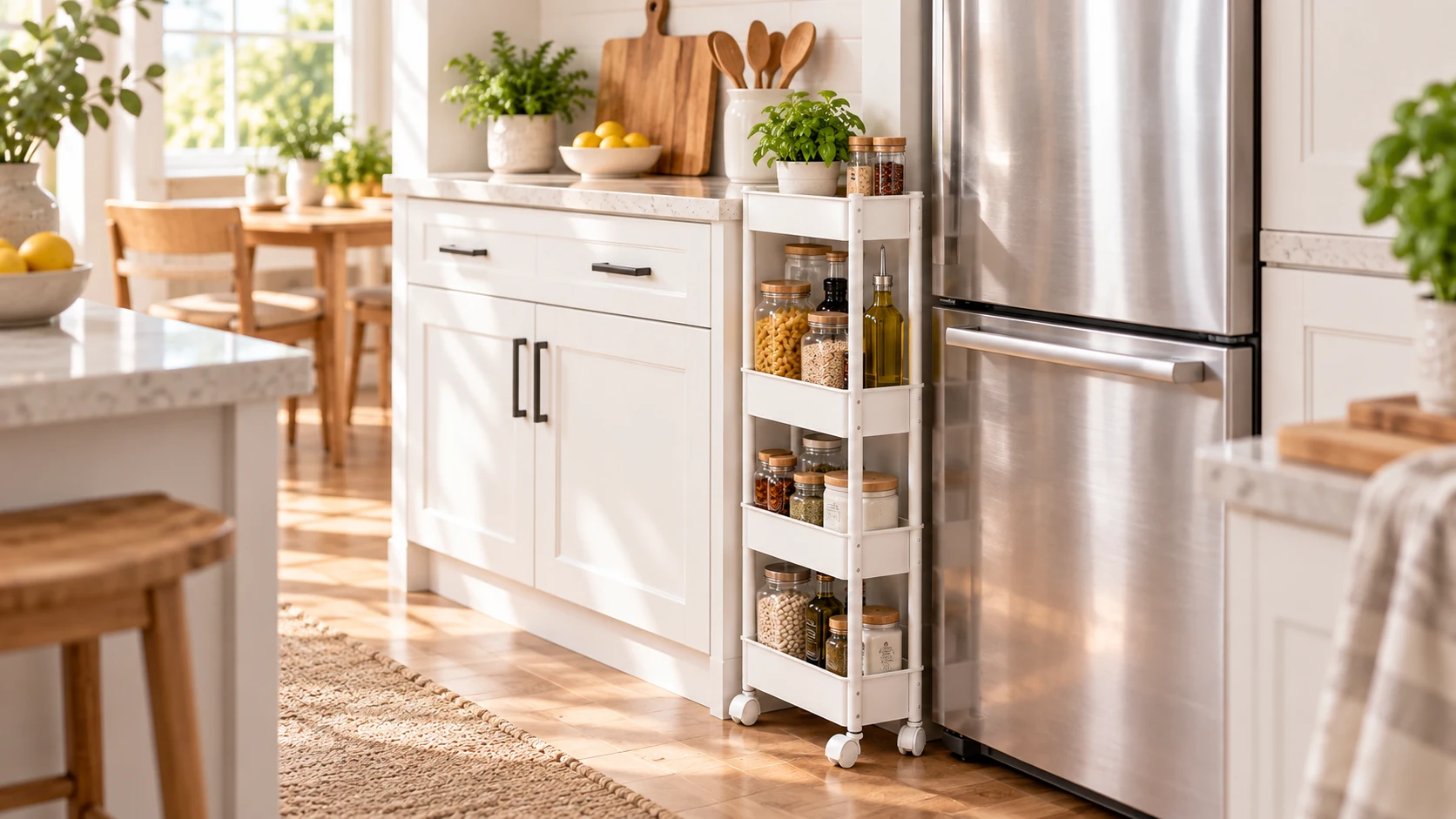
A slim rolling cart only earns its space if it fits the narrowest part of the gap, rolls out cleanly, and stores items without making the cart unstable. Start with the gap—not the number of shelves.
Disclosure: We may earn a commission from purchases made through links in this post, at no extra cost to you.
Quick Picks
Choose by the gap you actually have, then check height, pull-out clearance and what you plan to store.
Best for a premium 5-inch-class gap
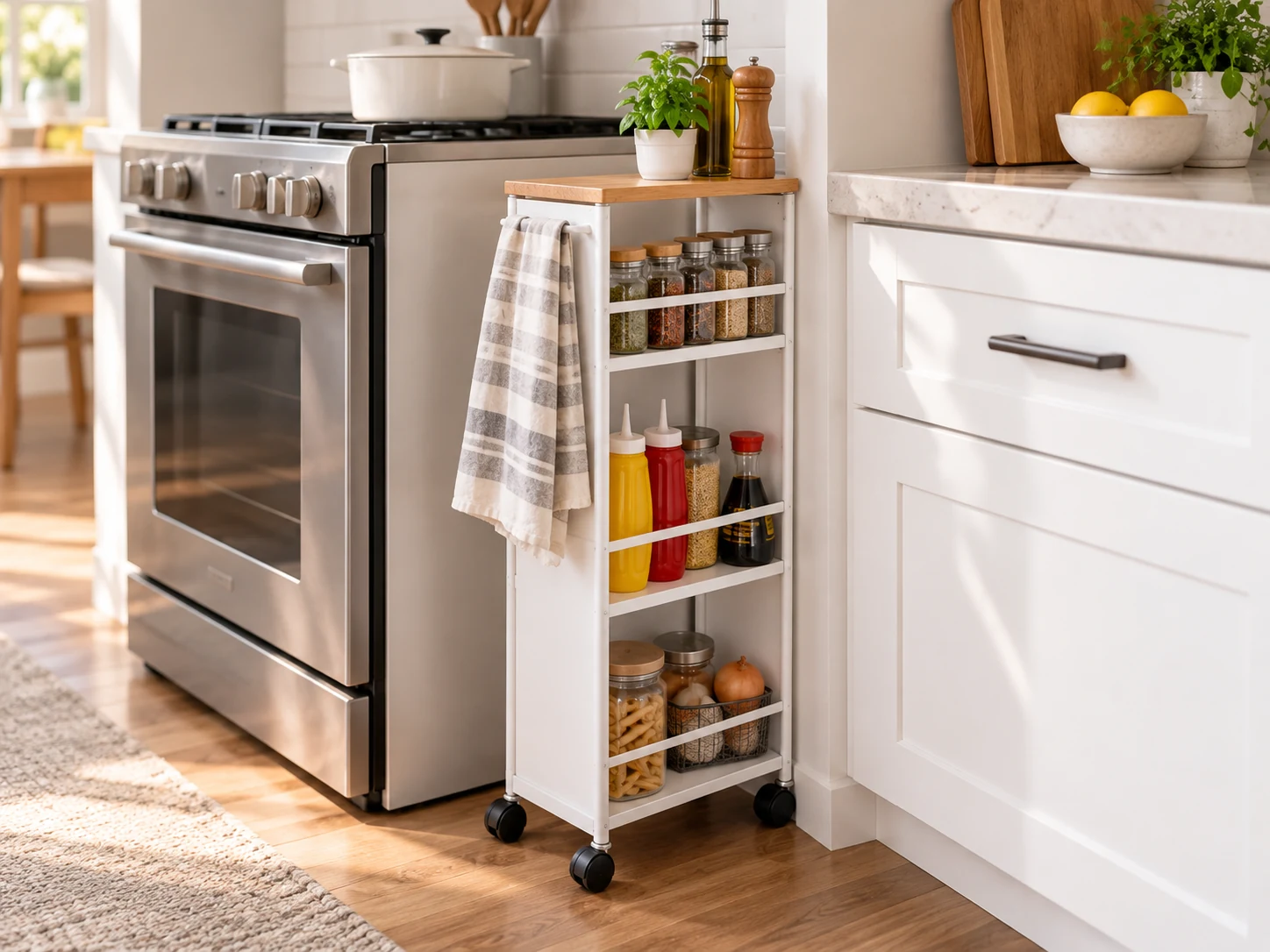
Yamazaki Home Tower Slim Rolling Wagon — White
Steel cart with a roughly 5.1-inch depth, integrated handle and casters. Best when the narrow footprint itself is the main reason to buy.
Best for a lightweight budget setup
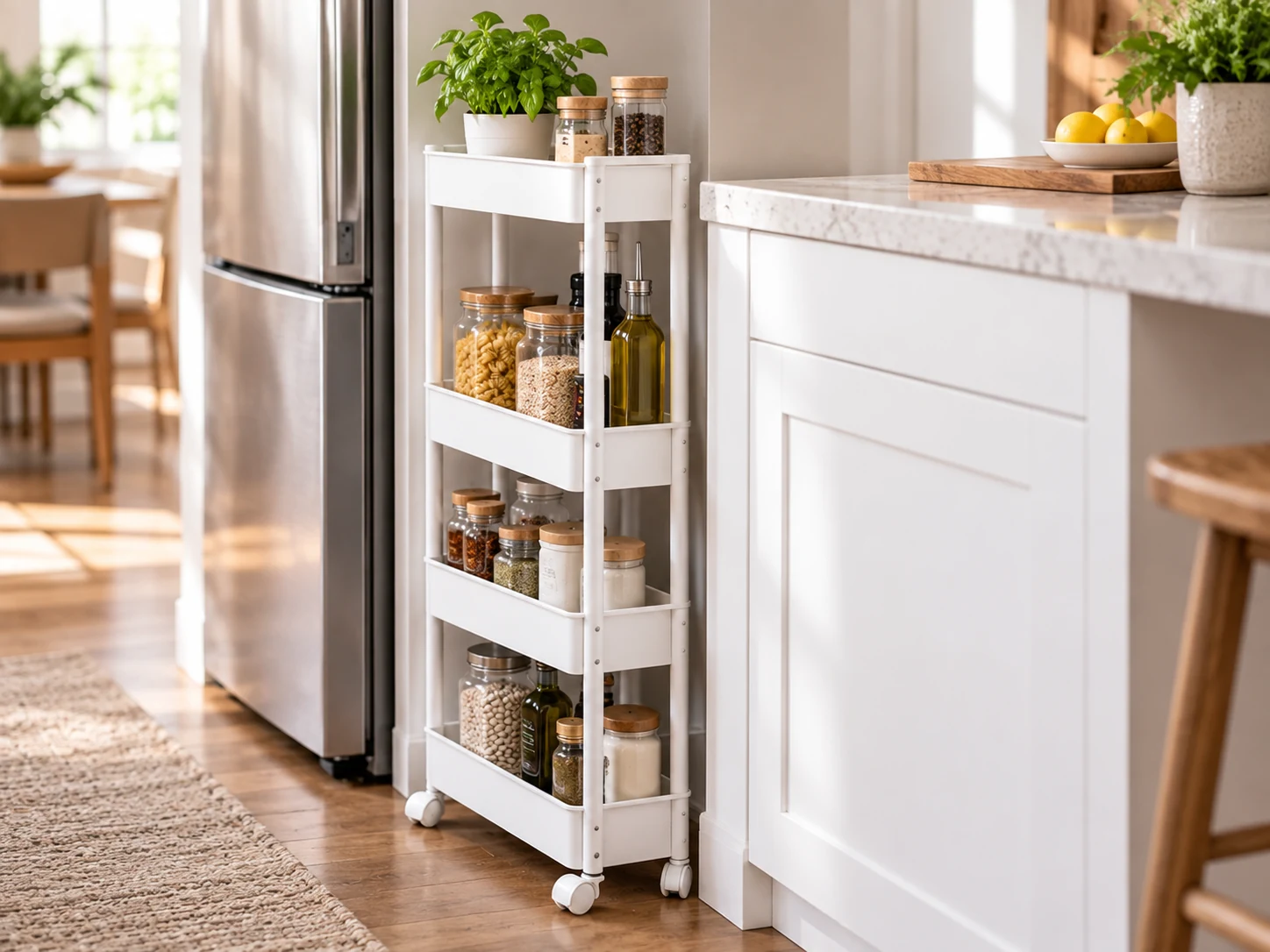
SPACEKEEPER 3-Tier Slim Rolling Storage Cart
A plastic-and-metal cart with a published footprint around 4.9 × 15.3 inches. Better for lighter pantry or household items than a heavy appliance load.
Best for a furniture-like look
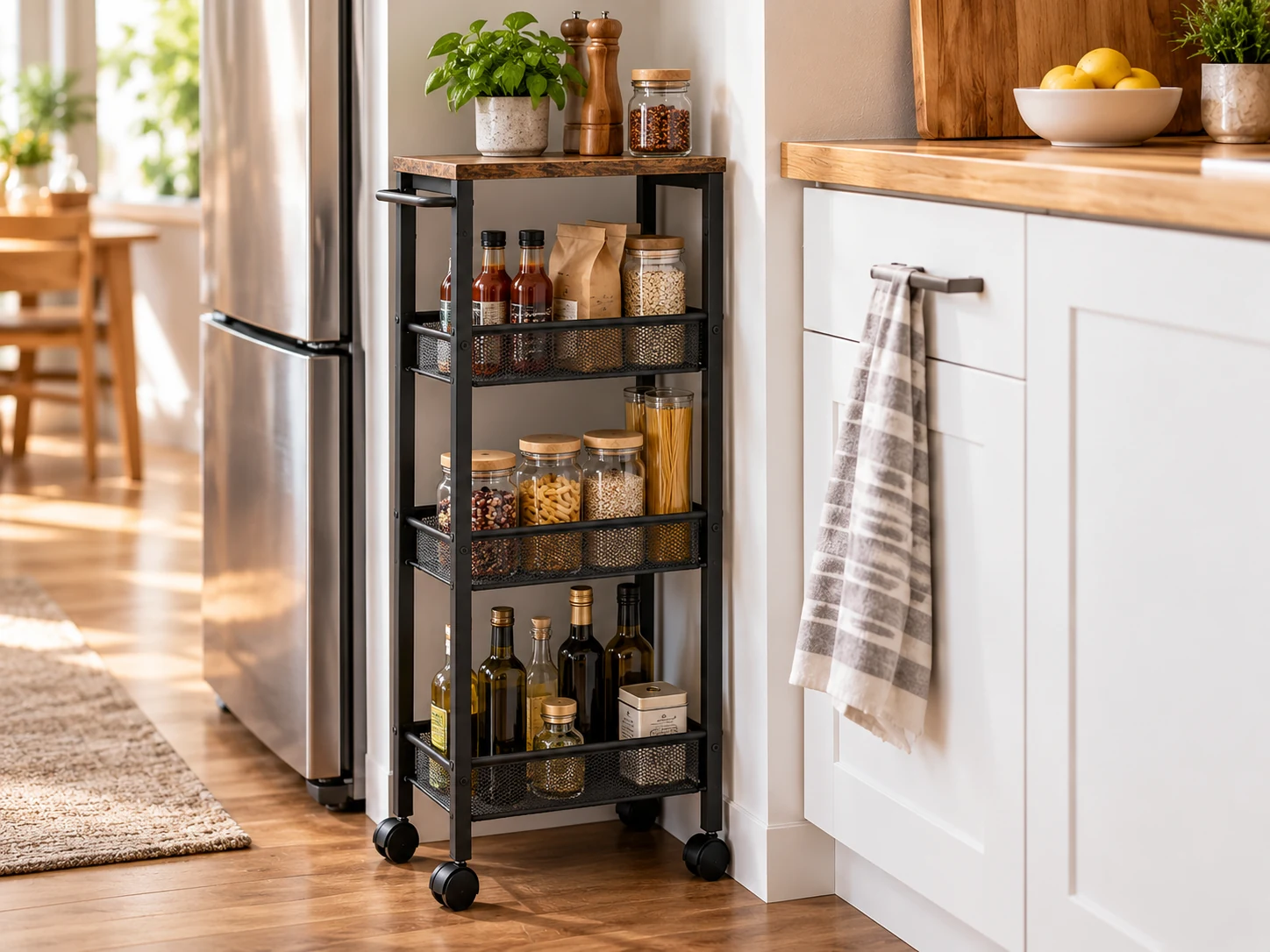
VASAGLE 4-Tier Slim Rolling Cart
About 5.1 inches deep with a metal frame, wood-look top and four tiers. Useful when the cart will remain visible instead of disappearing completely into a gap.
Measure the Gap Before You Compare Carts
A narrow cart can look perfect on a product page and still fail in the kitchen because the listed width is only one part of the fit. Use our Small Kitchen Measurement Checklist if you want to record the gap, obstructions and movement path before comparing carts.
- Measure the gap at the floor, middle and counter height. Baseboards, trim and walls that are not perfectly square can reduce the usable opening.
- Measure usable depth. The cart still needs room to sit without protruding into a walkway or blocking a door.
- Check the pull-out path. A rolling cart needs somewhere to roll. A refrigerator door, cabinet handle or dining chair can make the gap unusable even when the cart technically fits.
- Check refrigerator clearance requirements. Do not fill ventilation space that the appliance manufacturer requires around the refrigerator.
- Plan the load. Tall bottles, canned goods and small pantry items create different stability and shelf-height requirements.
Do not buy a 5.1-inch-deep cart for an opening that measures exactly 5.1 inches. Leave practical tolerance for uneven walls, trim, wheel movement and normal pulling in and out.
Quick Comparison
| Best for | Product | Published footprint | Key constraint |
|---|---|---|---|
| Premium ultra-slim storage | Yamazaki Home Tower Slim Rolling Wagon | About 18.9 × 5.1 in | Premium price; narrow shelves prioritize fit over bulk capacity |
| Budget light-duty storage | SPACEKEEPER 3-Tier Slim Rolling Cart | About 15.3 × 4.9 in | Lightweight construction; load placement matters |
| Visible kitchen storage | VASAGLE 4-Tier Slim Rolling Cart | About 17.9 × 5.1 in | Particleboard top should be kept dry; published static load is limited |
Yamazaki Home Tower Slim Rolling Wagon — White
Best for: a very narrow kitchen gap where build quality and footprint matter more than price
Yamazaki’s Tower Slim Rolling Wagon is designed specifically around narrow unused spaces. The U.S. product page lists dimensions of about 18.90 inches wide, 5.12 inches deep and 31.69 inches high.
The steel cart uses multiple shelf heights for bottles and smaller pantry items, and Yamazaki says two of the wheels lock while two rotate freely. The integrated handle is important in a true gap-storage setup because the cart is meant to be pulled out rather than accessed only from the front.
Why it works
The main advantage is not simply that it has wheels. It is the roughly five-inch depth combined with a tall vertical layout. That lets it use a strip of floor where a conventional utility cart would be too wide.
What to check
Measure the narrowest point of the gap and leave tolerance beyond the cart’s published 5.12-inch depth. Also compare the shelf spacing with the tallest bottles or containers you plan to store.
Skip it if
You have a wider open area and mainly need maximum capacity for the money. The premium here is tied to a very specific small-space footprint.
SPACEKEEPER 3-Tier Slim Rolling Storage Cart
Best for: lightweight pantry overflow when budget and a narrow footprint matter
Current listing data for the three-tier SPACEKEEPER cart identifies a footprint around 4.9 inches deep by 15.3 inches wide, with an overall height around 26.1 inches. The structure combines plastic shelving with metal components and uses casters for pull-out access.
Why it works
It addresses the same narrow-gap problem at a simpler construction level. For packets, small jars, cleaning supplies or other lighter household items, the narrow footprint can matter more than having a furniture-like finish.
What to check
Plan where the heaviest items will sit. A narrow, lightweight cart becomes less forgiving when heavy objects are placed high. Also check whether the 26-inch-class height uses the vertical space available in your gap efficiently.
Skip it if
You want to store heavy appliances, large bottles in substantial quantities, or a cart that will remain highly visible in a finished kitchen.
VASAGLE 4-Tier Slim Rolling Cart
Best for: a narrow cart that will stay partly visible in the kitchen
VASAGLE lists this four-tier cart at about 5.1 inches deep, 17.9 inches wide and 30.3 inches high. The design combines a metal frame with an engineered-wood top and three lower baskets, plus a handle and four swivel casters.
The manufacturer documentation lists a maximum static load of 22 pounds for this model, so it should be treated as organized storage rather than a platform for a heavy countertop appliance.
Why it works
The top surface gives the cart a more finished appearance than an all-plastic utility rack. It can make sense beside a cabinet or at the end of a run where part of the cart remains visible.
What to check
Keep the particleboard top dry, stay within the published load guidance, and check the full 17.9-inch length against the space where the cart will park.
Skip it if
Your gap is only barely wider than the cart’s published 5.1-inch depth or you need a moisture-tolerant cart beside a sink or other wet zone.
What Should You Store on a Narrow Kitchen Cart?
The best contents are usually items that are relatively compact, used often enough to justify easy access, and safe to distribute across a tall narrow structure.
- Spices, oils and small bottles that fit the shelf guards
- Foil, food-storage bags and boxed pantry supplies
- Coffee or tea supplies
- Light cleaning supplies when the cart is away from food-prep surfaces
- Canned or bottled goods placed low to keep the center of gravity down
A narrow rolling cart is usually a poor place for a heavy microwave, stand mixer or other appliance that would raise the center of gravity or exceed the cart’s stated load guidance. For countertop appliances, see our guide to storing countertop appliances in a small kitchen.
Frequently Asked Questions
How much extra clearance should I leave around a slim cart?
Do not treat the product width or depth as an exact-fit target. Leave enough tolerance for baseboards, uneven walls, wheels and the movement required to pull the cart out. The tighter and less square the gap, the more useful extra tolerance becomes.
Can I put a slim cart next to a refrigerator?
Only if doing so does not interfere with the refrigerator manufacturer’s required ventilation and installation clearances. Check the appliance manual first, then measure the remaining usable gap.
Are narrow rolling carts stable?
Stability depends on the cart design, floor, wheel setup and how you load it. Keep heavier items low, avoid exceeding published load limits and do not use a lightweight slim cart as a substitute for an appliance stand.
Is a 3-tier or 4-tier cart better?
The better choice is the one that uses your available height without making access awkward. A fourth tier adds storage, but it can also raise the center of gravity and may place the top shelf above a comfortable reach height.
How We Researched
Good Things Atlas compared narrow rolling carts by the constraint they solve first: usable gap width, cart depth, pull-out access, materials, shelf layout and published load guidance.
We checked current manufacturer information and retailer listing data for the exact products referenced here. Product dimensions and availability can change, so confirm the current listing before ordering.
We have not claimed hands-on testing of these carts. See how Good Things Atlas researches and recommends products.