Home & Kitchen · Buying Guide
Pantry Organizers for Deep Shelves: What Actually Works for Cans, Bottles and Packets
A deep shelf is useful only if you can retrieve what sits at the back. Start with the shelf’s usable dimensions and the path your hand—or an organizer—must travel. Then choose a way to bring food into reach, rather than buying containers by appearance alone.
Disclosure: We may earn a commission from purchases made through links in this post, at no extra cost to you.
Quick Picks
These options use different retrieval methods. Pick the one that fits your shelf and the food you need to reach.
Best for pulling packets forward

iDesign Linus BPA-Free Plastic Deep Kitchen Storage Bin
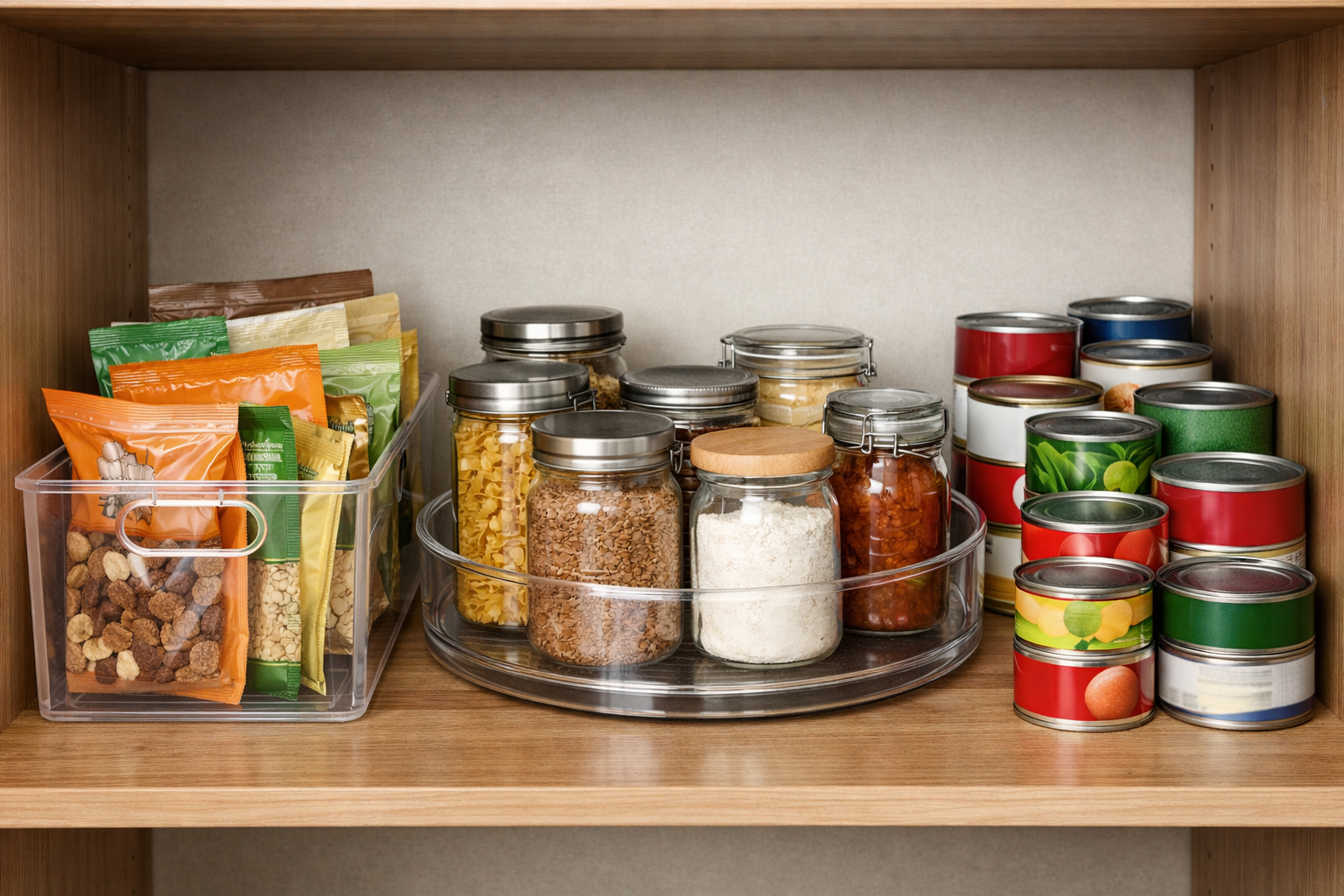
A 12 × 8 × 7.75-inch clear bin for grouping packets, boxes and lighter items you can move together.
Best for rotating jars into reach
YCLADEC 4 Pack Lazy Susan Turntable Organizer
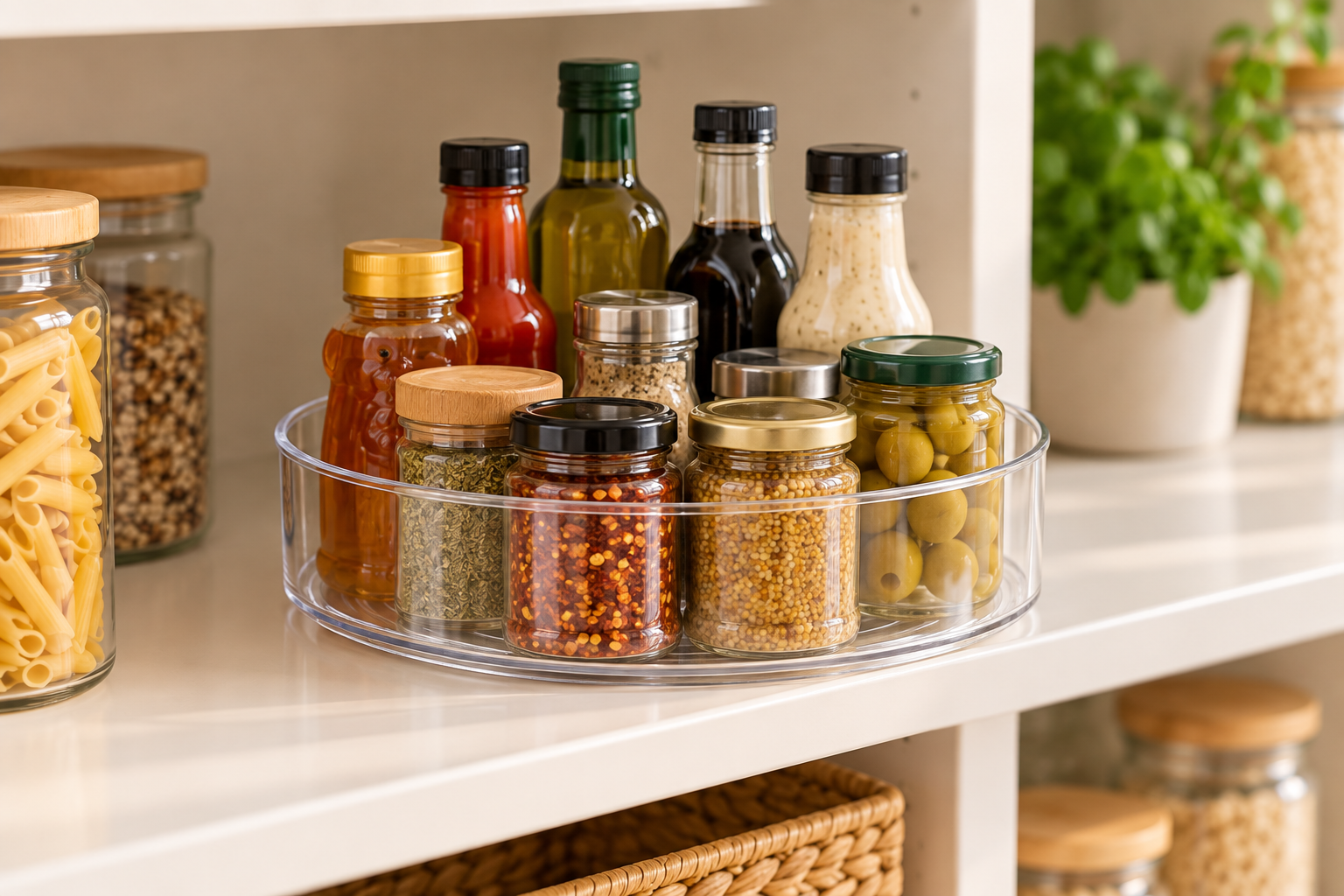
Four clear 11.5-inch turntables for jars, condiments and bottles where rotation fits better than a pulled bin.
Best for deep compatible cabinets

LYNK PROFESSIONAL SELECT Slide Out Cabinet Organizer
Model 421121DS is an 11-inch-wide, 21-inch-deep, one-tier installed pull-out for a compatible cabinet.
Measure the Space Food Must Move Through
The important measurement is not simply how deep the shelf looks. An organizer must fit its resting place and work while you retrieve food. Before shopping, note four things: shelf depth, usable width, clear height and the reach path from the back of the shelf to your hand. Use our Small Kitchen Measurement Checklist if you want a simple place to record them.
- Measure shelf depth. Check the surface available from front to back. A short organizer may leave an inaccessible strip behind it; a long one may project too far or be difficult to handle when full.
- Measure usable width. Measure between side walls, trim or neighboring stored items—not just the nominal shelf width. Allow enough room to grip or rotate the organizer.
- Check clear height. Include the tallest intended package. This matters especially for bottles on a turntable and for anything that must be lifted over a bin edge.
- Check the retrieval path. Can you pull a loaded bin straight toward you? Can a turntable make a complete rotation? Can an installed tray travel outward without meeting a door or another obstruction?
Measure at the shelf where the organizer will actually sit. A cabinet opening can be narrower than the interior space, and an open pantry shelf may still have nearby objects that block a pull-forward motion. Also check what supports the shelf and whether it is appropriate for the combined weight of the organizer and its contents. Do not assume a shelf or organizer has a particular load rating when one has not been verified.
Choose the Retrieval Method Before the Container
Think about the food that repeatedly disappears at the back. Loose packets and small boxes often benefit from being grouped and pulled forward. Jars and bottles can be easier to find when they rotate into view. In a compatible cabinet, an installed pull-out can bring a larger portion of the deep storage area toward you. Cans may call for a different layout again: a shallow group at the front, a riser where height allows, or a can rack that fits the shelf and the can sizes you buy.
No format automatically uses every inch of depth. A round turntable leaves space around its circular footprint, while a bin may leave unused depth behind it. A riser improves visibility but does not make a far-back item easier to reach if the shelf remains crowded. A pull-out requires a compatible mounting location and an unobstructed path. Choose the trade-off you can live with rather than trying to maximize the number of packages hidden on a shelf.
Quick Comparison
| Format | Useful for | Movement to check | Likely trade-off |
|---|---|---|---|
| Deep handled bin | Packets, boxes, lighter grouped items | Loaded pull-forward path | Exterior size exceeds usable interior space |
| Turntable | Jars, condiments, bottles | Full rotation with contents in place | Space around the round footprint |
| Installed pull-out | Deep compatible cabinets | Opening, mounting clearance and slide travel | Installation and cabinet-fit requirements |
iDesign Linus BPA-Free Plastic Deep Kitchen Storage Bin
Best for: pulling grouped packets, boxes and lighter pantry items forward as one unit.
The clear, single-bin variant in this guide measures 12 × 8 × 7.75 inches. Its exterior dimensions give you a starting point for shelf fit, but they do not tell you precisely how much food fits inside. Compare the packages you want to store with the bin’s usable interior before assuming a box or row of packets will fit.
Why it works
A bin turns several separate items into one group to retrieve. Instead of reaching around front-row food for a packet near the back, you bring the group forward, choose what you need and return it. Keeping one category per bin can make that movement easier to repeat without rearranging the whole shelf.
What to check
Confirm that the 12-inch dimension fits the intended front-to-back position and that there is enough width to grip and move the bin without catching its neighbors. Check the height of both the bin and the packages you plan to lift from it. Consider its handling when loaded: a bin that slides easily while empty may be awkward if filled with heavy cans or bottles. Inspect the interior shape and surfaces for the kind of crumbs or spills your pantry items create.
Skip it if
Your shelf has no clear pull-forward route, the bin would leave a large unreachable area behind it, or your main goal is storing heavy containers you do not want to move together.
YCLADEC 4 Pack Lazy Susan Turntable Organizer
Best for: rotating jars, condiments and bottles into reach without pulling a loaded bin outward.
This is the clear 11.5-inch, four-pack variant. Check the selected pack and diameter when buying; a different pack size is not the same option. The stated diameter is a useful fit check, but your arrangement also needs room for a complete turn with its contents in place.
Why it works
Rotation changes which container is at the front without requiring you to reach behind a row of jars. It is particularly worth considering when the shelf is deep enough to hide labels but pulling a whole group forward would be inconvenient. You can turn the organizer to inspect what you have, then select a container from an accessible position.
What to check
Allow for the full 11.5-inch rotating footprint, not just a stationary circle squeezed between other goods. Test the proposed position with your tallest bottle or jar in mind: it needs clear height and must not strike the shelf above or neighboring items as it goes around. Leave enough edge clearance for comfortable access. Think about how stable your actual mix of container shapes will be when turned, and whether you can remove the organizer for cleaning after a spill. No load rating for this variant has been verified here.
Skip it if
The shelf is too narrow for an unobstructed rotation, your tallest bottles lack overhead clearance, or you need to store rectangular packets and boxes with minimal wasted space. A round organizer need not fill the full depth of a rectangular shelf to be useful, but decide deliberately what belongs in the space around it.
LYNK PROFESSIONAL SELECT Slide Out Cabinet Organizer
Best for: a deep, compatible cabinet where an installed tray can bring stored items forward.
The option linked here is model 421121DS: an 11-inch-wide, 21-inch-deep, one-tier wood-and-chrome pull-out. Those dimensions identify the variant, not a promise that it will fit every cabinet with an apparently similar interior. Treat installation and movement as part of the buying decision.
Why it works
Rather than moving individual food packages or lifting a separate bin, an installed pull-out moves its storage area toward the opening. That can address the central problem of a deep cabinet: useful space at the back that is difficult to see or reach. It is the most installation-dependent of these three approaches.
What to check
Measure the clear cabinet opening as well as its interior width and depth. Verify the mounting surface and the installation clearances specified for the selected model. Consider where the cabinet door sits when open and whether the tray can travel outward without interference. Check clear height above the tray for your intended packages, and confirm that the supporting cabinet and installed hardware suit the load you plan to store. The exact usable capacity and loaded slide travel have not been established here; consult the current product specifications and instructions rather than inferring them from the 11 × 21-inch variant size.
Skip it if
You cannot install an organizer, the opening or mounting area is unsuitable, or the outward travel would obstruct how you use the kitchen. For an open pantry shelf, a movable bin or a rearranged layout may be simpler.
What About Cans, Risers and Can Racks?
Cans expose a weakness in the idea that every deep shelf needs a deep bin. A row of heavy cans can be tiring to pull forward as one load. A riser may make cans at the back easier to see if the shelf has sufficient clear height, but visibility alone does not solve a difficult reach. A can rack may organize a particular collection well, provided it fits both the shelf and the can sizes you actually keep. Neither format replaces a fit and stability check.
Try planning the can layout on paper before buying another organizer. How many rows will remain reachable? Will packages in front block access to the back? Can you lift a can safely from its position? If the answers are poor, storing frequently used cans toward the front and reserving the back for less frequently needed items may work better than adding another tier.
Check Usable Space, Stability and Cleanup—Not Just Shelf Fit
Exterior dimensions help you rule out an organizer that cannot fit, but they do not describe its usable interior. Bin walls take up space; the outer diameter of a turntable does not tell you the dimensions of every jar arrangement it can hold; and a pull-out’s stated variant size does not establish its usable loading area. Compare actual packages and the current product specifications before committing to a tight fit.
Consider the organizer in motion and after a spill. A stable setup should let you take an item without causing neighboring bottles or stacked packages to shift. A cleanable setup should let you reach crumbs or residue without dismantling the entire shelf. Avoid loading an organizer—or the shelf beneath it—based on an assumed rating. When an exact load limit or travel measurement matters to your plan, obtain it from the current specifications or instructions.
When a Simpler Layout Beats Decanting
Decanting is an option, not a prerequisite for an orderly deep pantry. Original packets and boxes may already fit a bin; jars may be easy to retrieve on a turntable; and a cabinet pull-out can improve access without changing the food containers at all. Before transferring everything, try grouping similar packages, moving the most-used items forward and giving each organizer a clear job.
Leave some working room. A shelf packed to its edges may look efficient until you need to turn a tray, grip a bin or lift a bottle. The useful measure of an arrangement is whether you can find, remove and return food without repeatedly unloading the front row.
Frequently Asked Questions
Are bins or turntables better for deep pantry shelves?
Choose by movement and package shape. A bin groups packets and boxes that you can pull forward together. A turntable brings jars and bottles around to the front, provided it has room to rotate with those containers in place. Neither is automatically better for every shelf.
Should an organizer fill the full depth of the shelf?
Not necessarily. Filling the depth matters less than being able to retrieve food safely and comfortably. Check whether unused space at the back has a deliberate purpose or will simply become an inaccessible hiding place.
Can I use a cabinet pull-out on an open pantry shelf?
Do not assume an installed cabinet organizer suits an open shelf. Verify the specified mounting surface, opening and installation clearances for the exact model. If those conditions are not present, consider a non-installed retrieval method.
Do I need to decant food to organize a deep pantry?
No. Start by testing access with the packets, boxes, cans and jars you already buy. Grouping, rotation, a suitable pull-out or a simpler shelf layout may solve the reach problem without transferring food.
How We Researched
Good Things Atlas compared deep-shelf organizers by the constraint they solve first: shelf geometry, package shape, retrieval path, movement clearance, stability and cleaning.
We checked retailer information for the exact Amazon variants referenced here and used current product details to verify the selected sizes and configurations. Availability, pack sizes and listing details can change, so confirm the current offer before ordering.
We have not claimed hands-on testing of these organizers. See how Good Things Atlas researches and recommends products.