
Home & Kitchen · Buying Guide
How to Store Countertop Appliances in a Small Kitchen
A small kitchen does not need every appliance hidden away. The better approach is to decide what deserves permanent counter space, what can slide back under a cabinet, and what should move off the counter entirely.
Disclosure: We may earn a commission from purchases made through links in this post, at no extra cost to you.
Quick Picks
Start with the storage problem you actually need to solve. Then check the measurements and constraints before ordering.
Best for compact daily-use appliances
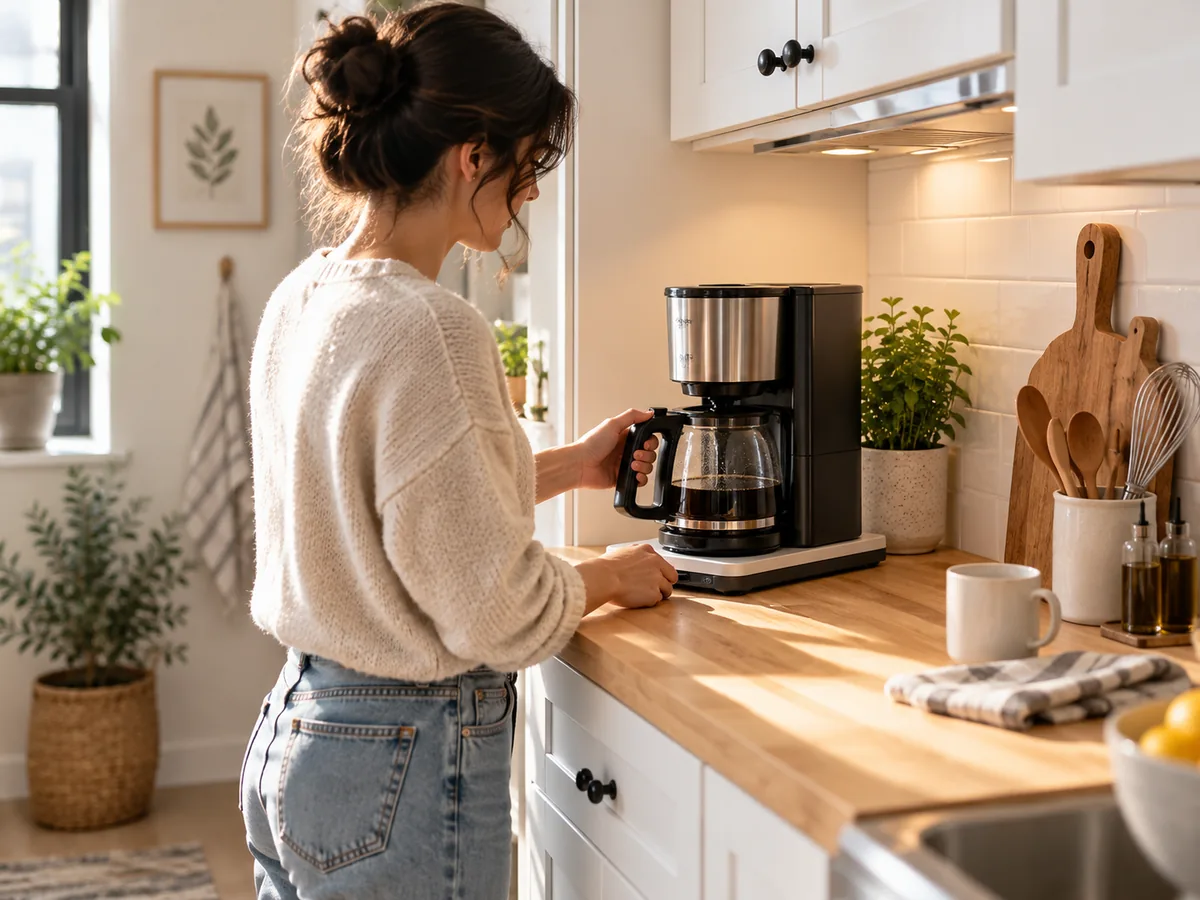
OXO Countertop Appliance Slider 9 × 14
Low-profile option for an appliance that mainly needs to slide forward from under a cabinet. Check the 35 lb limit and added height.
Best for larger countertop appliances

Ibyx Elegant Appliance Slider 16 × 13
Wider bamboo platform for appliances that stay on the counter but need easier access. Check footprint, weight and ventilation clearance.
Best for heavy appliances in a base cabinet
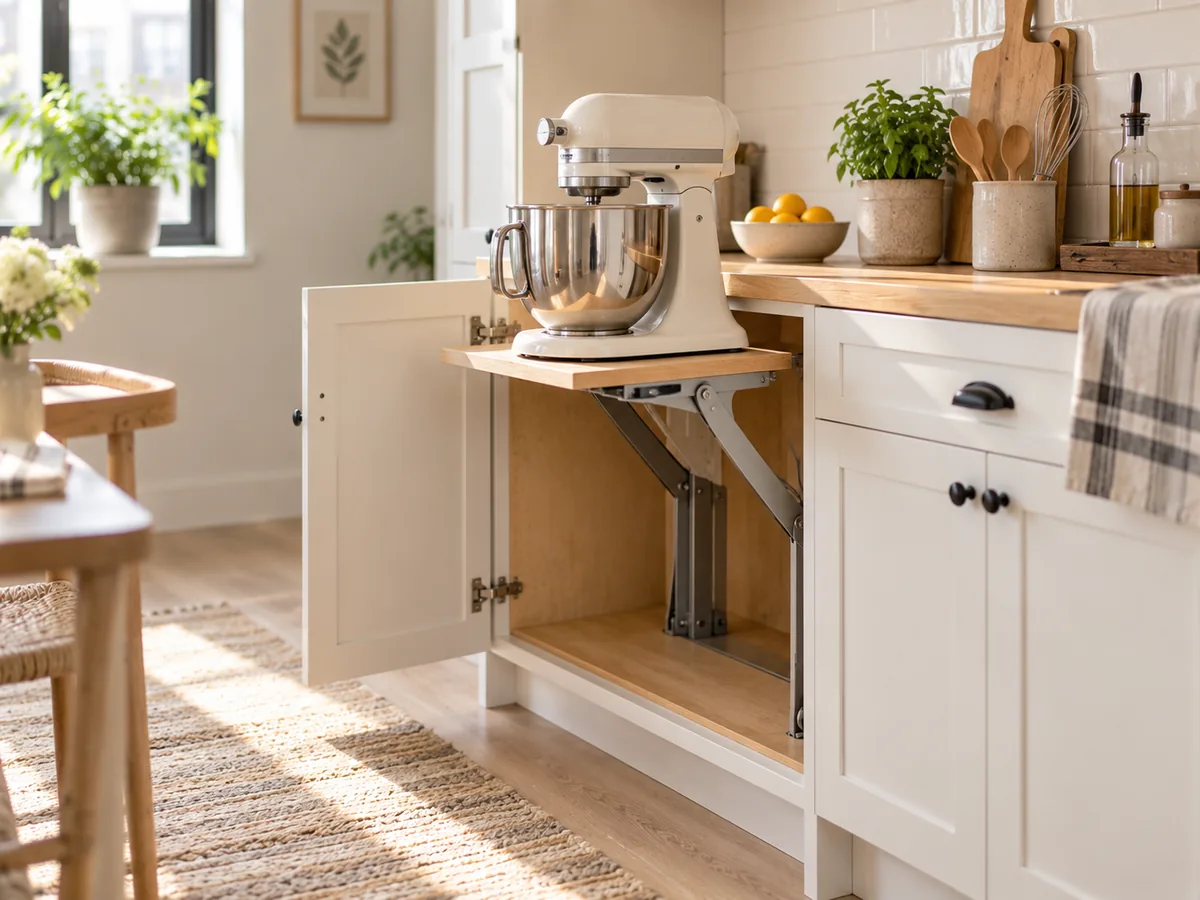
Rev-A-Shelf Heavy-Duty Appliance Lift
Spring-assisted cabinet solution for a heavy appliance you do not want to carry to the counter. Cabinet fit and installation are critical.
Best for moving an appliance off the counter
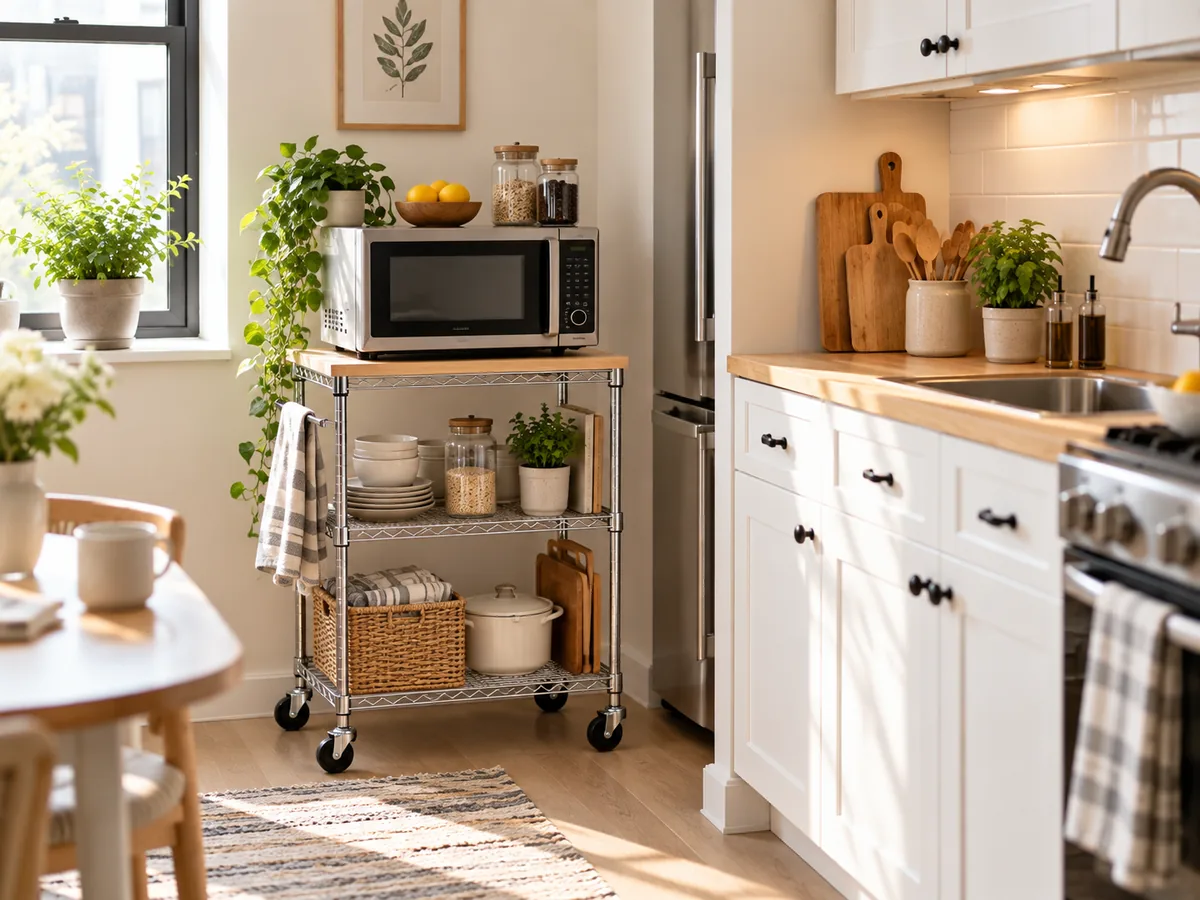
Amazon Basics 3-Tier Storage Rack
Creates a separate appliance station when the countertop itself is the constraint. Check floor space, clearance and appliance placement requirements.
Good small-kitchen appliance storage starts with the appliance, not the organizer.
A coffee maker, stand mixer and air fryer may all live on a countertop, but they create very different storage problems. One may simply need to slide forward for daily use. Another may be too heavy to move comfortably. A third may be taking up counter space even though you only use it occasionally.
Before buying another organizer, measure what you already own and decide what problem you are actually trying to solve.
Before You Buy Any Appliance Storage
Before choosing a storage solution, write down five things:
- Appliance footprint: width and depth at the widest points.
- Appliance height: including lids, handles or parts that open upward.
- Weight: especially if you plan to move the appliance regularly.
- Use frequency: daily, several times a week, weekly or occasional.
- Available storage space: counter depth, cabinet clearance and any floor space available for a cart.
Those measurements usually tell you which type of storage makes sense before you look at a specific product.
A frequently used appliance may deserve to stay on the counter but become easier to move. A heavy appliance may justify a cabinet lift. And when counter space itself is the problem, adding another countertop organizer may not help at all.
Quick Comparison
| Best for | Product | Key constraint |
|---|---|---|
| Compact daily-use appliance | OXO Countertop Appliance Slider 9 × 14 | 35 lb limit and added height under cabinets |
| Larger countertop appliance | Ibyx Elegant Appliance Slider 16 × 13 | Footprint, weight and ventilation clearance |
| Heavy appliance stored in a base cabinet | Rev-A-Shelf Heavy-Duty Appliance Lift | Cabinet fit and installation requirements |
| Moving an appliance off the main counter | Amazon Basics 3-Tier Storage Rack | Available floor space and appliance clearance |
OXO Countertop Appliance Slider — 9 × 14 in
Best for: compact daily-use appliances that need to move forward from under a cabinet
If an appliance already has a logical home on your countertop but is annoying to pull forward every time you use it, a slider is one of the least disruptive fixes.
The OXO Good Grips Countertop Appliance Slider measures 9 × 14 × 1.2 inches and is rated to hold up to 35 pounds. OXO lists blenders, coffee makers and stand mixers among the appliances the slider is designed to accommodate.
Why it works
It solves a movement problem without creating a new storage location.
The appliance can stay where you already use it, but slide forward when you need access and back when you want more working space.
The narrow 9-inch width also makes more sense than a large platform when the appliance itself has a compact base.
What to check
Measure the feet or true base of the appliance, not just the body. For a tray-specific sizing check, see our appliance slider fit guide before choosing a platform.
Also measure the vertical clearance under your upper cabinets. The slider itself adds about 1.2 inches of height, so an appliance that barely fits under a cabinet now may no longer fit once it sits on the platform.
Check the appliance’s actual weight against the 35-pound rating.
Skip it if
Your appliance is wider than the platform, exceeds the stated load limit or needs to be completely removed from the counter to solve your space problem.
Ibyx Elegant Appliance Slider — 16 × 13 in
Best for: larger countertop appliances that still need frequent access
A larger appliance does not always need to leave the counter. Sometimes the real problem is having to lift, drag or rotate it every time you need access.
The Ibyx Elegant Appliance Slider uses a wide bamboo platform measuring approximately 16 × 13 inches and is rated for appliances up to 40 pounds. Its rolling design lets the appliance move forward from beneath an upper cabinet and return to its storage position without repeatedly lifting the appliance.
Why it works
The larger platform makes it better suited to appliances such as espresso machines, coffee makers and other equipment with a wider footprint.
It also has a substantial shopper history compared with many newer appliance sliders, which makes it useful as a market-validated alternative rather than simply another variation of the same idea.
What to check
Measure the appliance base first and make sure the full footprint sits appropriately on the platform.
Check the appliance weight against the 40-pound rating, and measure the total appliance height after adding the slider underneath it. An appliance that currently just fits beneath an upper cabinet may no longer clear it once raised.
Also consider what happens during actual use. Some appliances need additional ventilation, lid clearance or room around hot surfaces after being pulled forward.
Skip it if
The appliance is compact enough for a narrower platform, exceeds the stated load rating, or is used so rarely that permanent countertop space is difficult to justify.
Rev-A-Shelf Heavy-Duty Appliance Lift
Best for: a heavy appliance you want to store inside a compatible base cabinet
This is a fundamentally different solution.
Instead of moving an appliance backward on the countertop, the Rev-A-Shelf Heavy-Duty Appliance Lift with Maple Shelf stores it inside a base cabinet and uses a spring-assisted mechanism to bring the shelf toward counter height.
The system is designed for appliances up to 60 pounds and uses adjustable spring tension to assist with lifting.
Why it works
For a heavy mixer or similar appliance, repeatedly lifting it from a low cabinet onto the countertop can be the main reason it ends up living on the counter permanently.
An appliance lift changes the movement required. Instead of carrying the appliance from one surface to another, the hardware assists as the shelf rises from the cabinet.
What to check — carefully
This is the most fit-critical recommendation in this guide.
The ML-MPHDSCCR-18 model is designed around an 18-inch full-height base cabinet and requires sufficient cabinet opening, depth and height for both the hardware and appliance.
Measure the actual usable cabinet interior rather than assuming that a cabinet described as “18 inch” automatically works.
Also consider what storage space the lift will displace. A mixer lift can make a heavy appliance easier to access, but it may consume a substantial portion of a base cabinet.
Skip it if
You have a drawer occupying the upper section of the base cabinet, cannot meet the required interior dimensions, rent and cannot modify the cabinetry, or simply want a no-installation solution.
Amazon Basics Portable Kitchen 3-Tier Storage Rack
Best for: moving an appliance off the main countertop entirely
Sometimes appliance organization cannot solve the real problem: there simply is not enough countertop space.
The Amazon Basics Portable Kitchen 3-Tier Storage Rack creates a separate appliance station with a wood top, two adjustable lower shelves and caster wheels. Its footprint is approximately 21 × 15 inches, with an overall height of about 36.7 inches.
Why it works
Instead of reorganizing an already crowded countertop, the rack creates new usable surface area.
The two lower shelves can hold related kitchen items while the caster wheels allow the station to move when necessary. Two of the four casters lock, helping keep the rack stationary once it is parked.
Its relatively shallow 15-inch depth is also useful in a small kitchen where a deeper cart could consume too much circulation space.
What to check
Measure both the appliance and the rack location.
Confirm that the appliance footprint fits appropriately on the intended surface and follow the appliance manufacturer’s requirements for ventilation, clearance and placement.
Then measure the floor area around the rack. Doors, drawers, refrigerator doors and normal walking routes still need enough clearance when the cart is parked.
Skip it if
Your kitchen does not have a sensible parking location for a rolling station, or if adding the cart would narrow an already tight walkway.
How to Measure Before Buying
Use a tape measure and record the numbers before opening a product page. If you want one reusable worksheet for carts, organizers and appliance storage, start with our Small Kitchen Measurement Checklist.
1. Measure the appliance width
Measure the widest fixed part of the appliance, including feet or side projections that determine how it sits on a surface.
2. Measure the depth
Measure from the furthest front point to the furthest rear point.
Do not forget cords, protruding handles or doors that change the space required during use.
3. Measure the height
For appliances stored beneath upper cabinets, measure both the appliance and the available cabinet clearance.
Then account for the height added by any slider or platform.
4. Find the appliance weight
Use the manufacturer’s specification when possible rather than estimating.
This is particularly important when comparing against the stated capacity of a slider or appliance lift.
5. Measure the destination too
For a cabinet lift, measure the actual usable cabinet opening and interior.
For a rolling rack, measure the floor area where it will live.
A product can fit the appliance perfectly and still be the wrong choice if it does not fit the kitchen.
Frequently Asked Questions
Should countertop appliances be stored in cabinets?
Some can be, but the right answer depends on weight, size, frequency of use and the cabinet itself.
A lightweight appliance used occasionally may be easy to store on an ordinary shelf. A heavy appliance that comes out every morning may be inconvenient enough that it simply ends up back on the counter.
Start with how you actually use the appliance.
Are appliance sliders worth it in a small kitchen?
They can be useful when an appliance already belongs on the counter but needs to move forward for use.
They do not create additional counter space. Their job is to make an existing countertop location easier to use.
How do I know which size appliance slider I need?
Measure the appliance’s actual base and check its weight.
Also measure the vertical clearance beneath any upper cabinets. A slider adds height beneath the appliance, which can matter when clearance is already tight.
Can an appliance lift fit any kitchen cabinet?
No.
Appliance lifts have specific cabinet-opening, depth, height and mounting requirements. Measure the actual usable cabinet interior and confirm compatibility with the exact lift model before ordering.
Can I put any appliance on a rolling kitchen rack?
Not automatically.
Check the appliance footprint and follow its manufacturer’s requirements for placement, ventilation and clearance. Also make sure the rack itself can be parked without blocking doors, drawers or normal kitchen circulation.
What should I do with appliances I rarely use?
Before buying specialized storage, check whether they can use existing cabinet, pantry or utility storage.
A dedicated slider, lift or rolling rack makes the most sense when it solves a recurring access or space problem.
How We Researched
Good Things Atlas compared these storage approaches by looking at the problems they solve rather than treating every appliance organizer as interchangeable.
We researched countertop appliance storage across major retailers, manufacturers and marketplace listings, including products with strong shopper histories and current market momentum.
We then compared product dimensions, stated load limits, cabinet-fit requirements, intended use and the type of storage problem each solution actually addresses.
Trend and shopper signals were used to help identify candidates, but they did not determine the recommendation by themselves. Products were selected based primarily on how well they fit the reader’s use case.
We have not claimed hands-on testing of these products.
Because appliance dimensions, kitchen layouts and cabinet construction vary, verify current manufacturer specifications and measure your own appliance and storage space before purchasing.
See how Good Things Atlas researches and recommends products →